
AAPR Presentations, Installations and Workshops
The Arts Against PostRacialism Project (AAPR) used arts-based methods to engage audiences with Professor Howard’s research into contemporary blackface in Canada . This initiative built on Howard’s earlier research that investigated instances of blackface as they occur in the contemporary moment in Canada. He argues that this problematic blackface phenomenon is rooted in Canadian settler-colonial relations in their anti-black iterations.
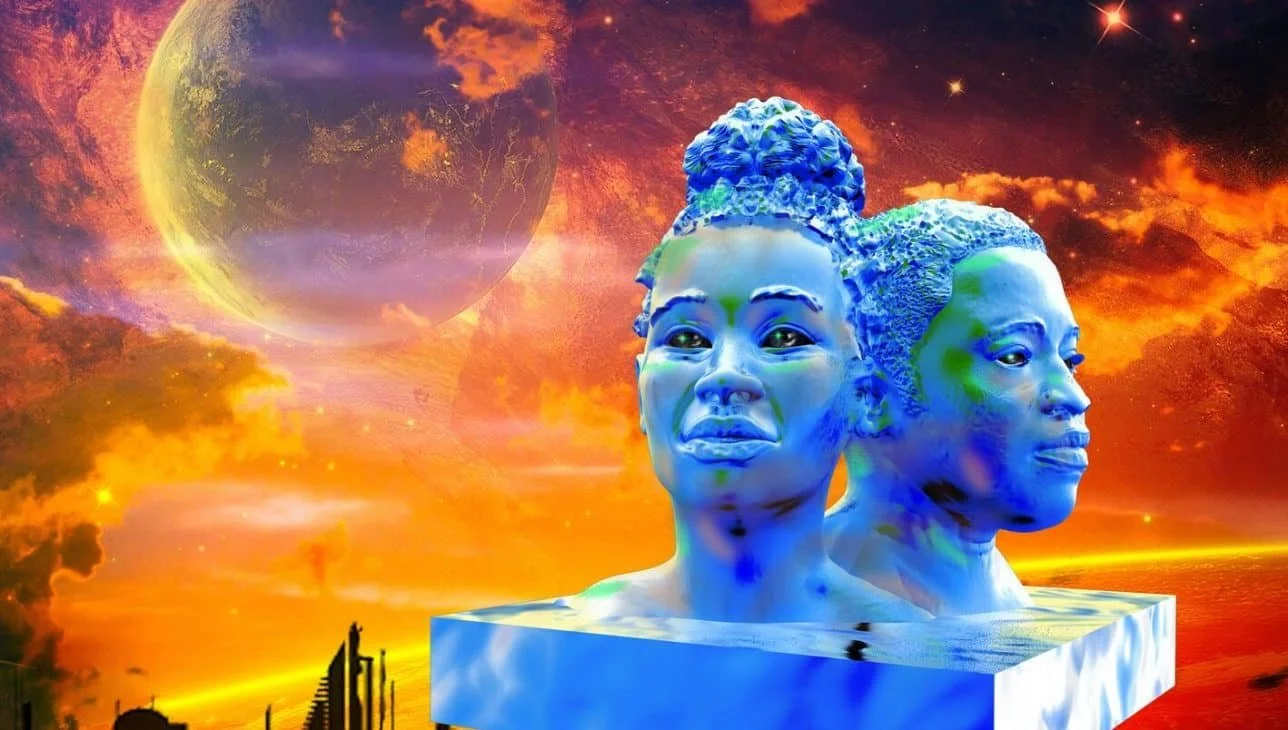
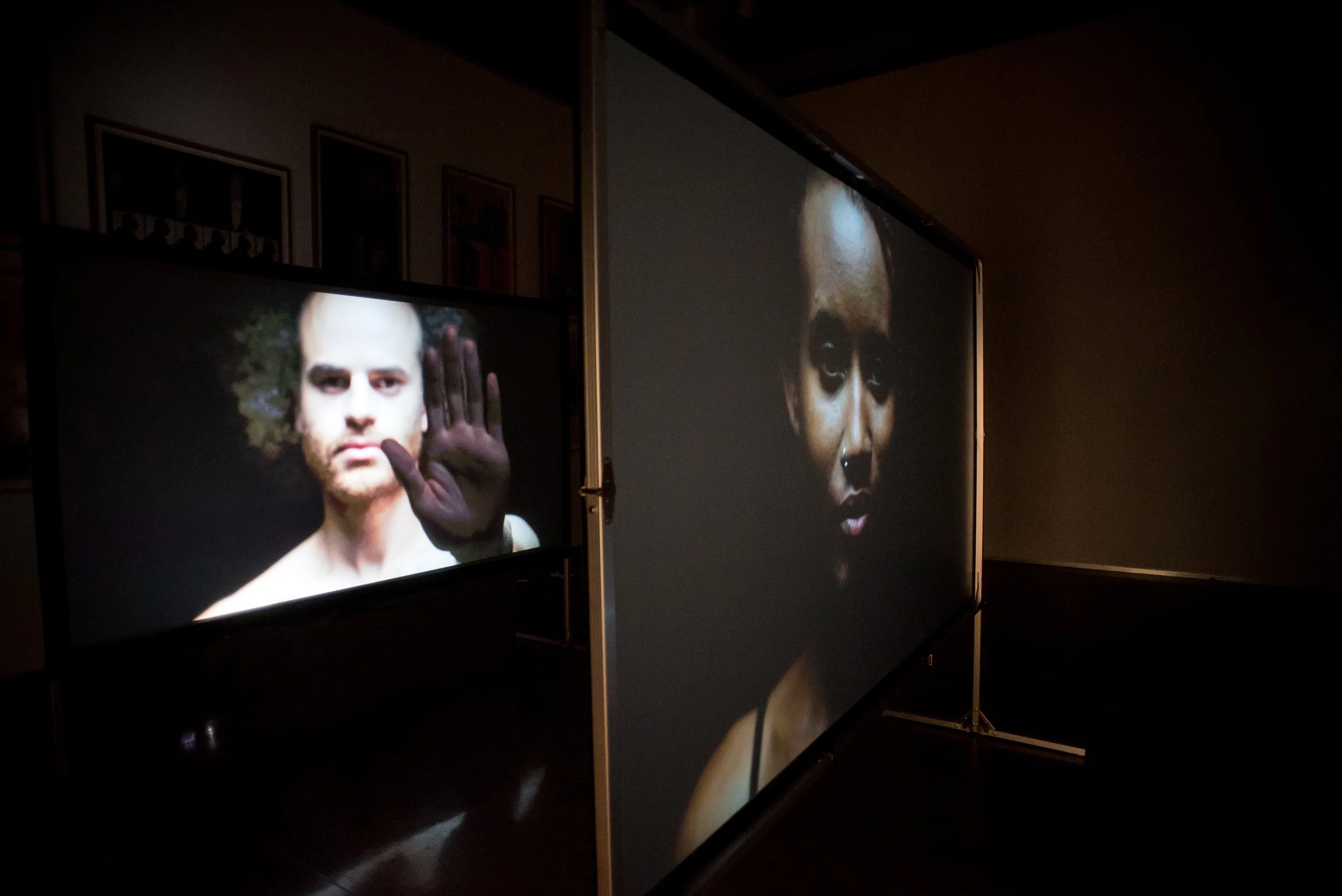
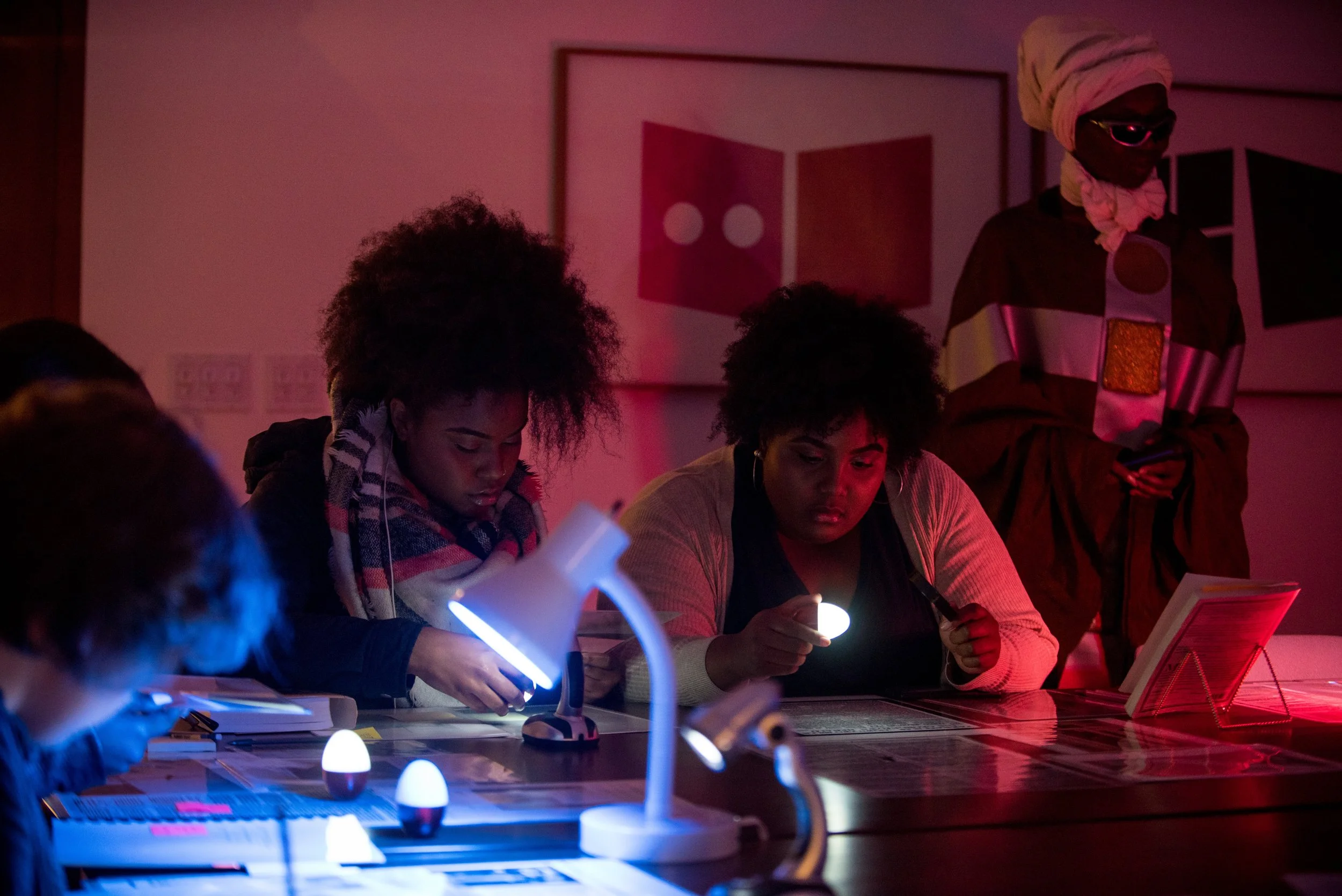
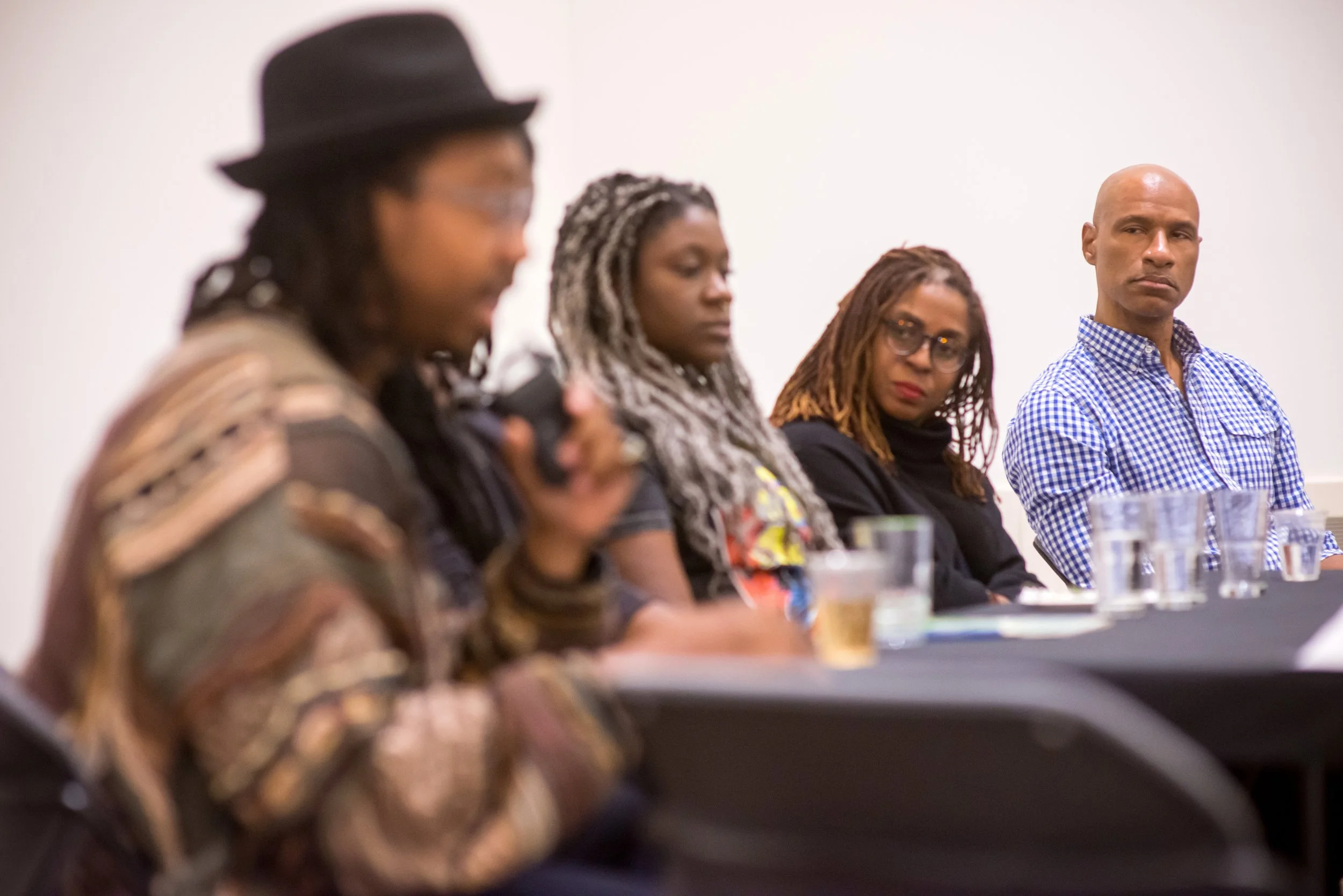
Photo by Garrett Elliott
AAPR used arts-based approaches and engaged with the aesthetic of Afrofuturism to promote engagement with the findings of Dr. Howard’s blackface research, and to support resistance against contemporary blackface in Canada. This approach understands that:
“social justice requires that as much as we use our critical faculties to grasp the complex and invidious ways that systems of oppression operate, we also need to engage aesthetic and sensory capacities so as to create and experiment with alternative possibilities—imagining what could otherwise be” (Bell & Desai, 2011, p. 287).
Similarly, Afrofuturism grasps the alienation experienced by Black bodies and beckons us to imagine a future devoid of anti-black racism, and from this place to reflect on the present (Anderson & Jones, 2016; Ramsby, 2012).
-
References
Anderson, R., and Jones, C.E. (2016). Afrofuturism 2.0: The Rise of Astro-Blackness. London: Lexington Books.
Bell, L.A. & Desai, D. (2011) Imagining Otherwise: Connecting the Arts and Social Justice to Envision and Act for Change: Special Issue Introduction, Equity & Excellence in Education, 44(3), 287-295.
Rambsy II, H. (2012, February 13). Past-future visions & Afrofuturism. Cultural Front. Available at http://www.culturalfront.org/2012/02/past-future-visions-afrofuturism.html
The following were artistic interventions by the Arts Against Postracialism team, they are each described below. You can also learn more about the artists along with links to their individual work further down the page:
"Hide and See: Engaging the in/visible presence of blackface in Canada" Keynote Presentation //
Professor Philip S.S. Howard
This keynote presentation contemplated contemporary Canadian blackface (CCB) incidents on Canadian university campuses and beyond, and their meanings. It elaborated a theoretical framework that understands anti-Black racism as both foundational to the Canadian settler state and endemic to Canadian university campuses.
Then, drawing on data from a SSHRC-funded study of contemporary Canadian blackface, the presentation argued that the particular features of CCB drew on and instantiated specific mainstream tropes through which Blackness was understood in the Canadian settler-colonial context, while always posing as a new, exceptional, and startling phenomenon. It concluded by exploring the promise of the Afrofuturist imagination in challenging CCB in the contexts from which it emerged and in which it was so at home.
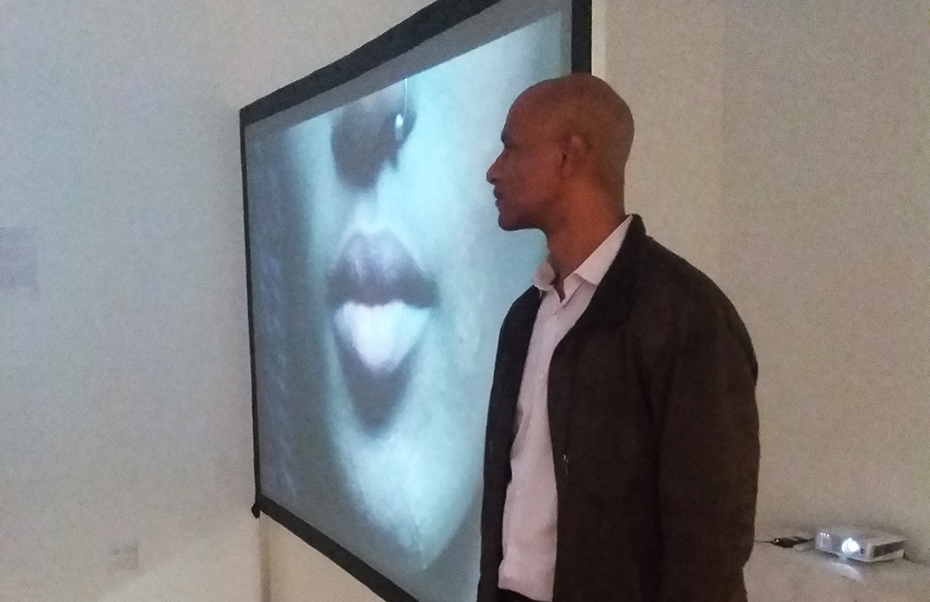
Photos by Garrett Elliott
Afronautic Research Lab //
Artist: Camille Turner
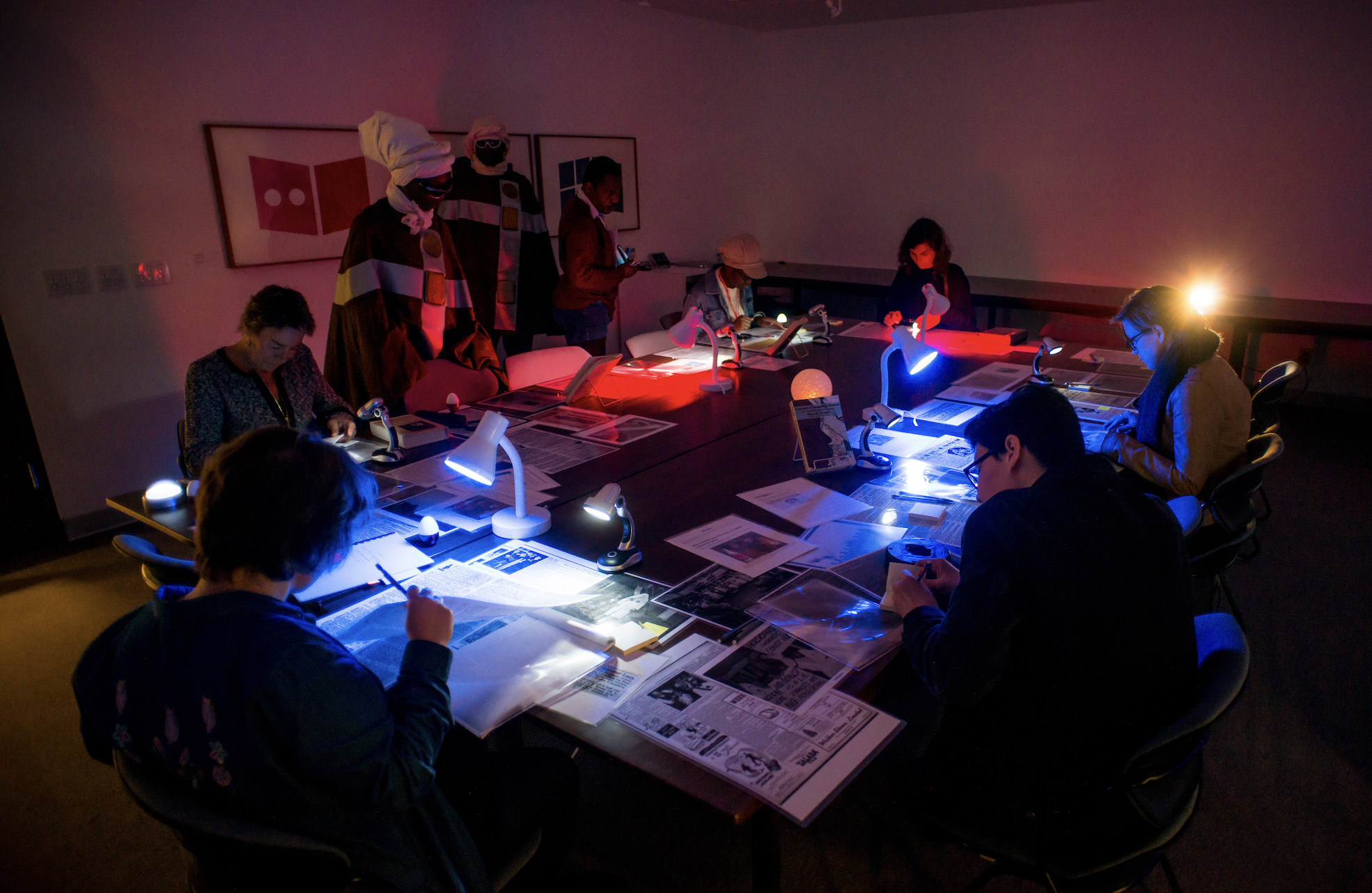
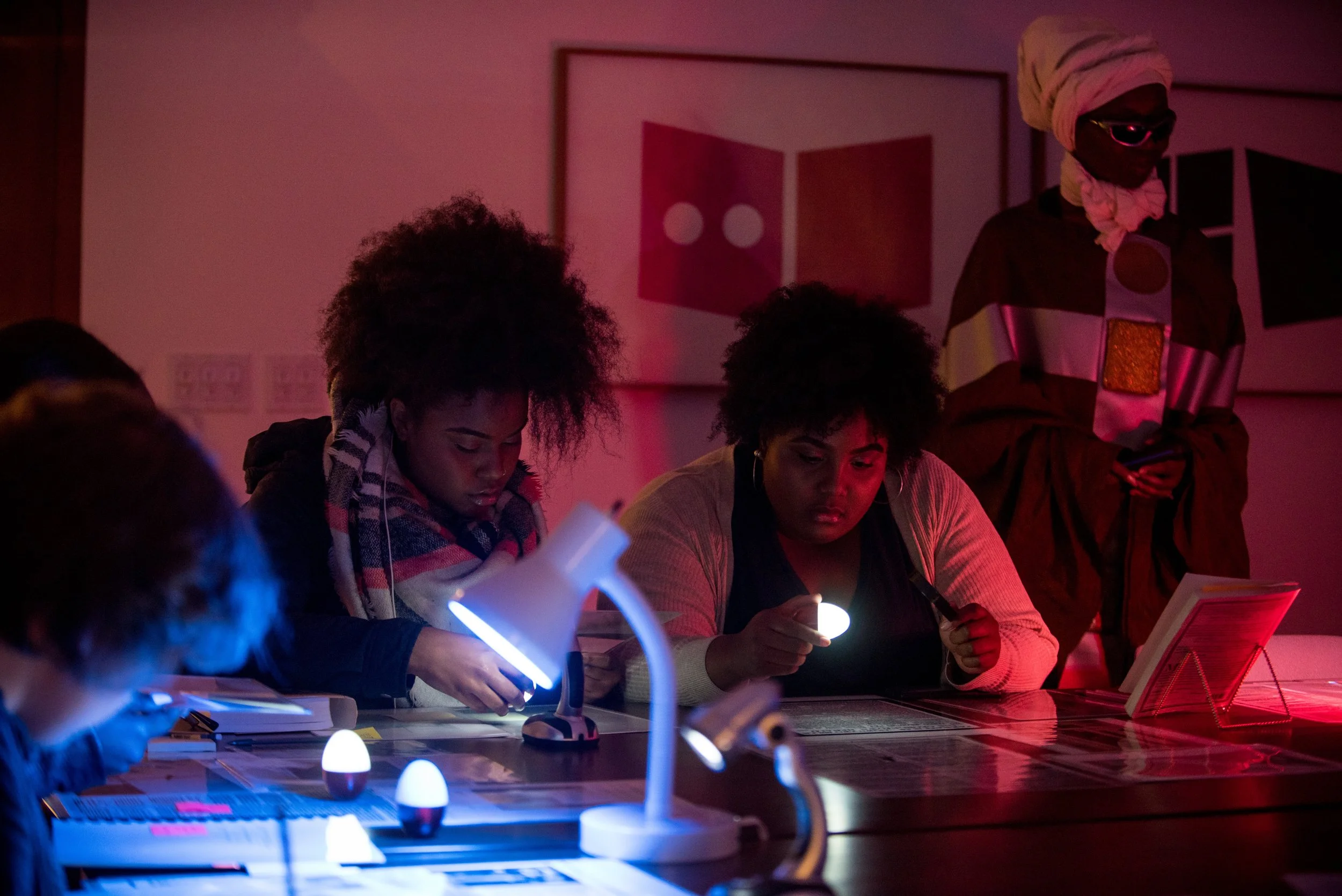
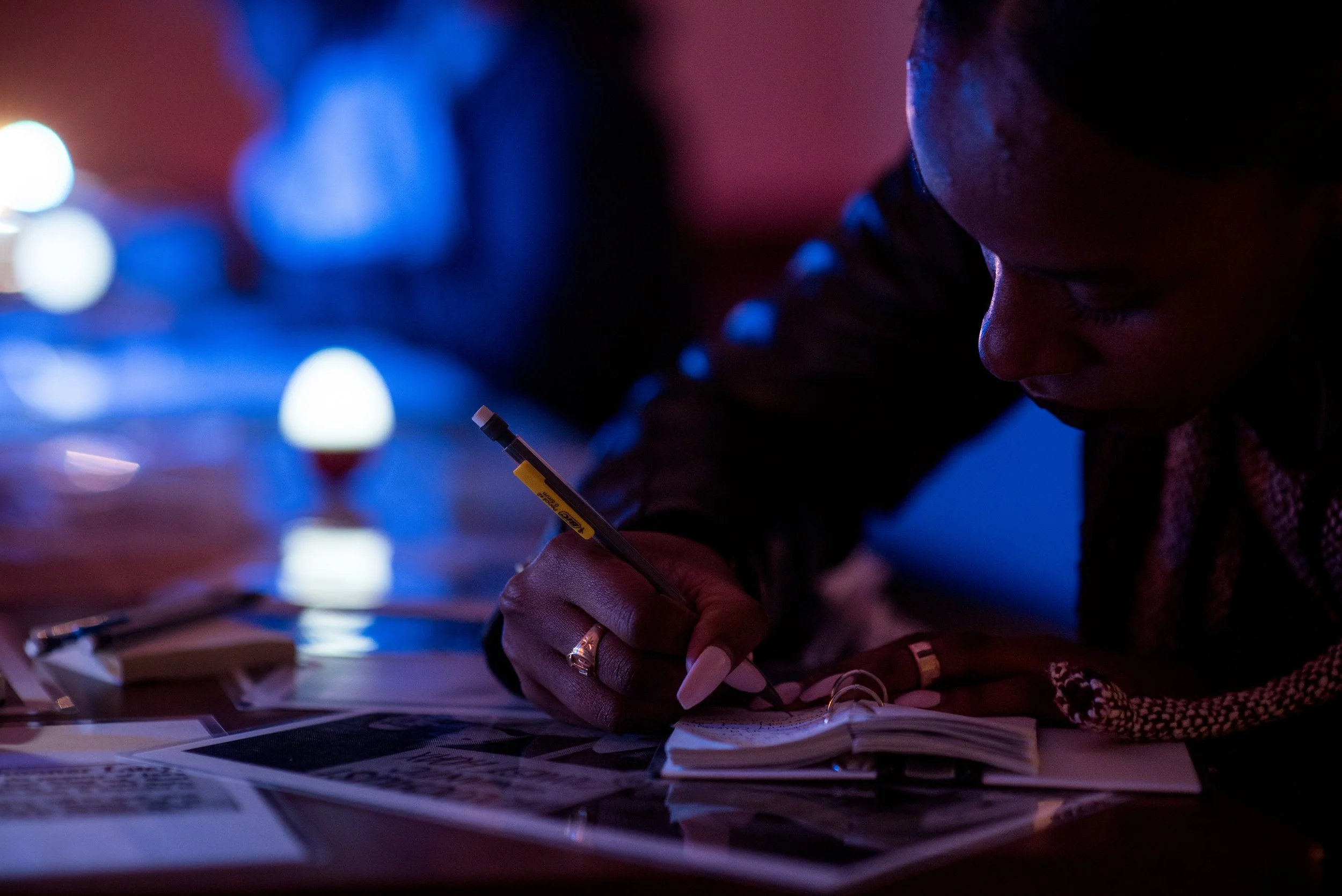
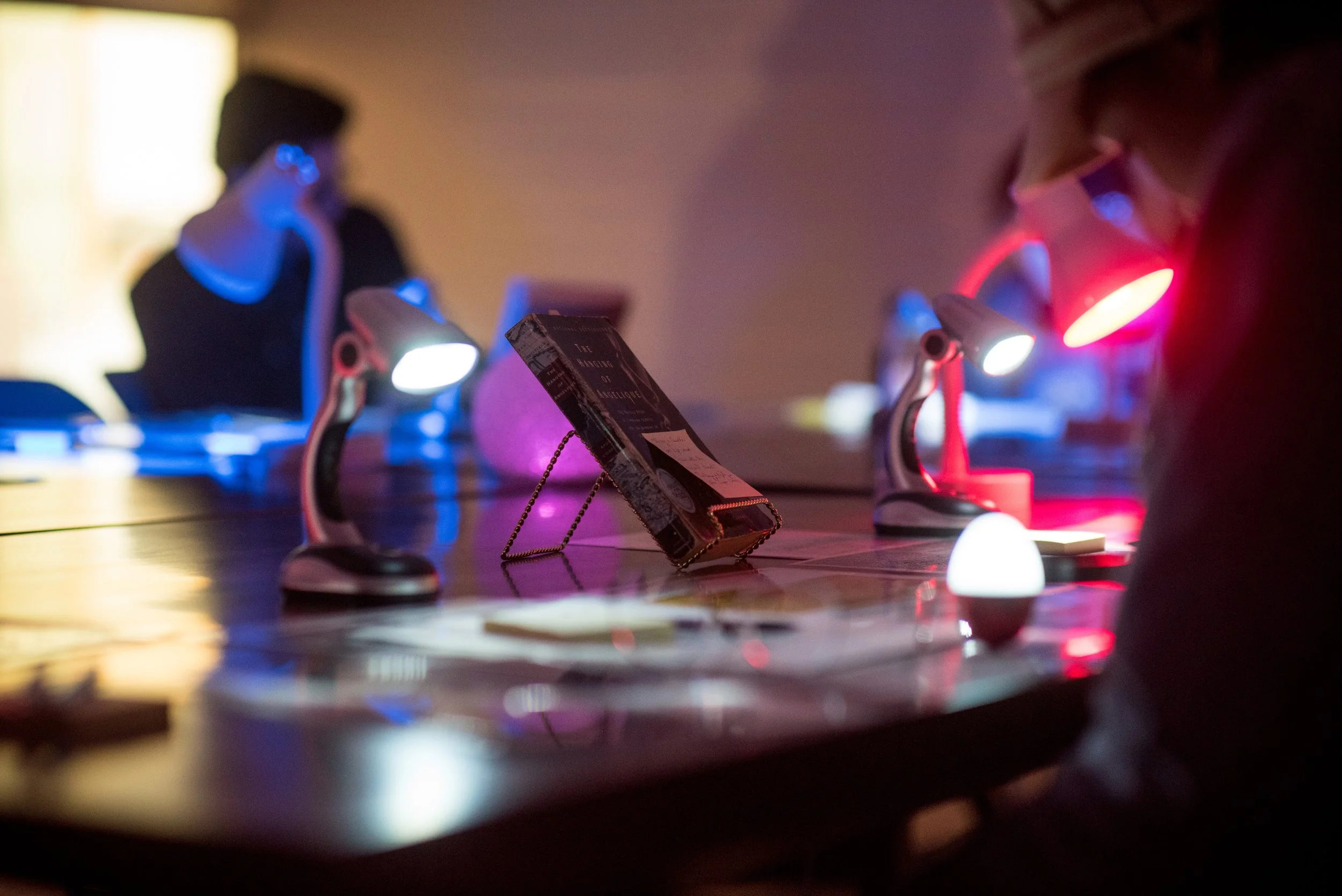
The Afronautic Research Lab uses performance and social practice art to bring participants into contact with archival and documentary evidence revealing the roots of anti-Blackness in and beyond Canada. The Afronauts are inspired by the stories of the Dogon people of Mali. These space travellers, who left Earth 10,000 years ago, had returned to their home planet to save it. Citizen researchers are invited into the Lab—a dark reading room where primary archival materials, such as 18th-century Canadian newspapers with ads posted by Canadian slave owners, can be contemplated using flashlights and magnifying glasses. An audio loop provides a sonic guide to the social history from which this evidence emerged. The lab enables reflection on how the past shaped the present and pointed to the future.
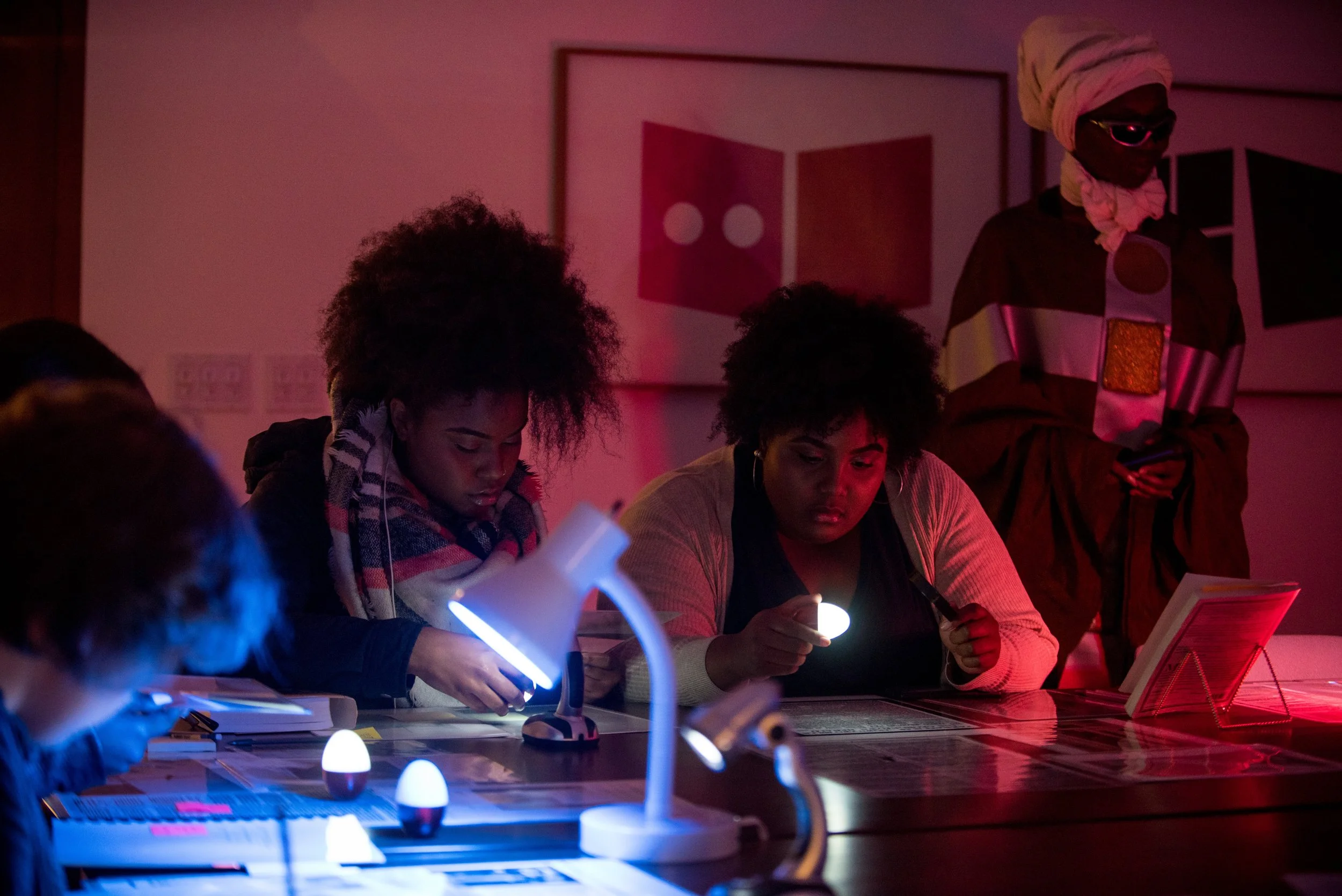
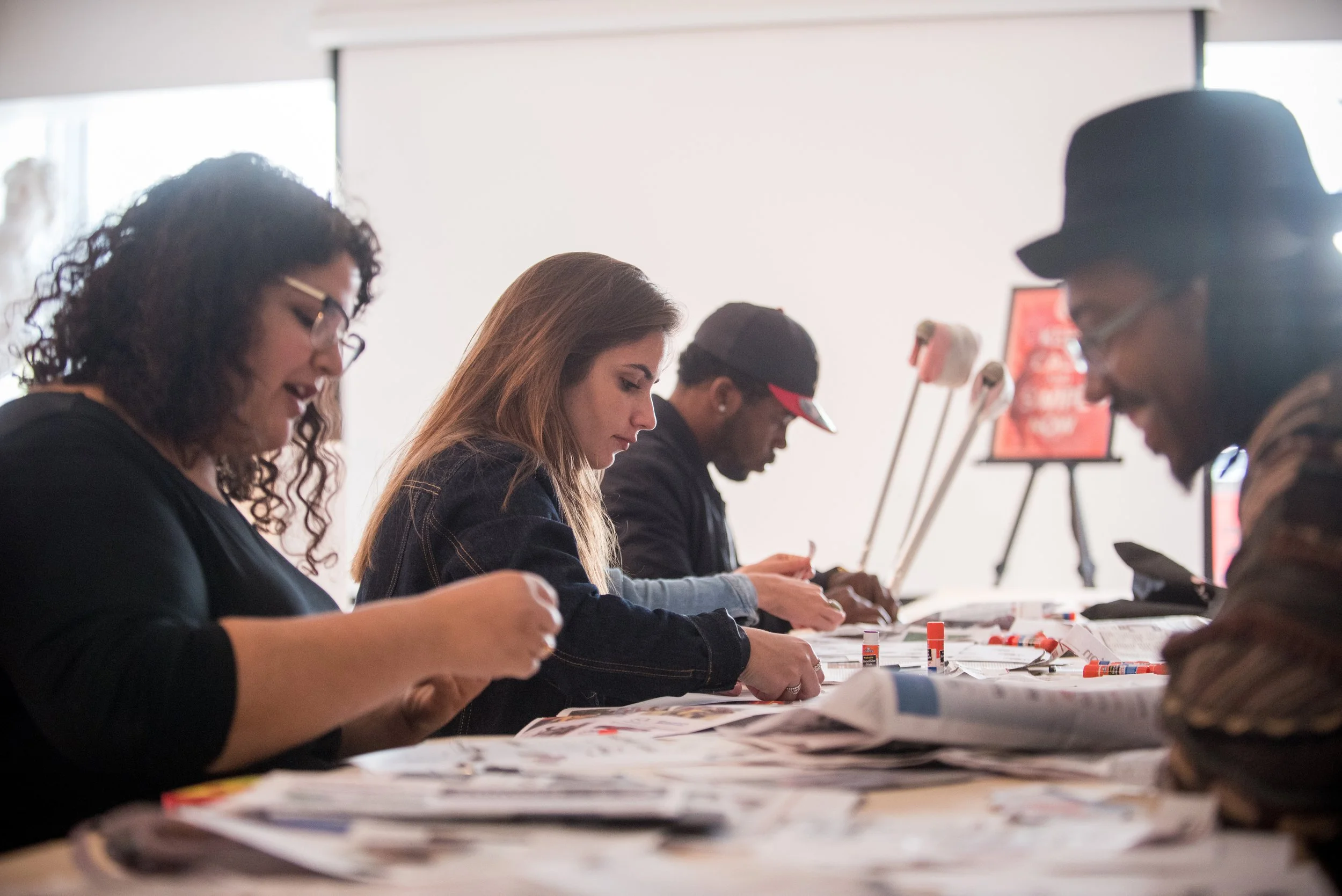
Photo by Garrett Elliott
Emergence //
Artist: Nadine Valcin
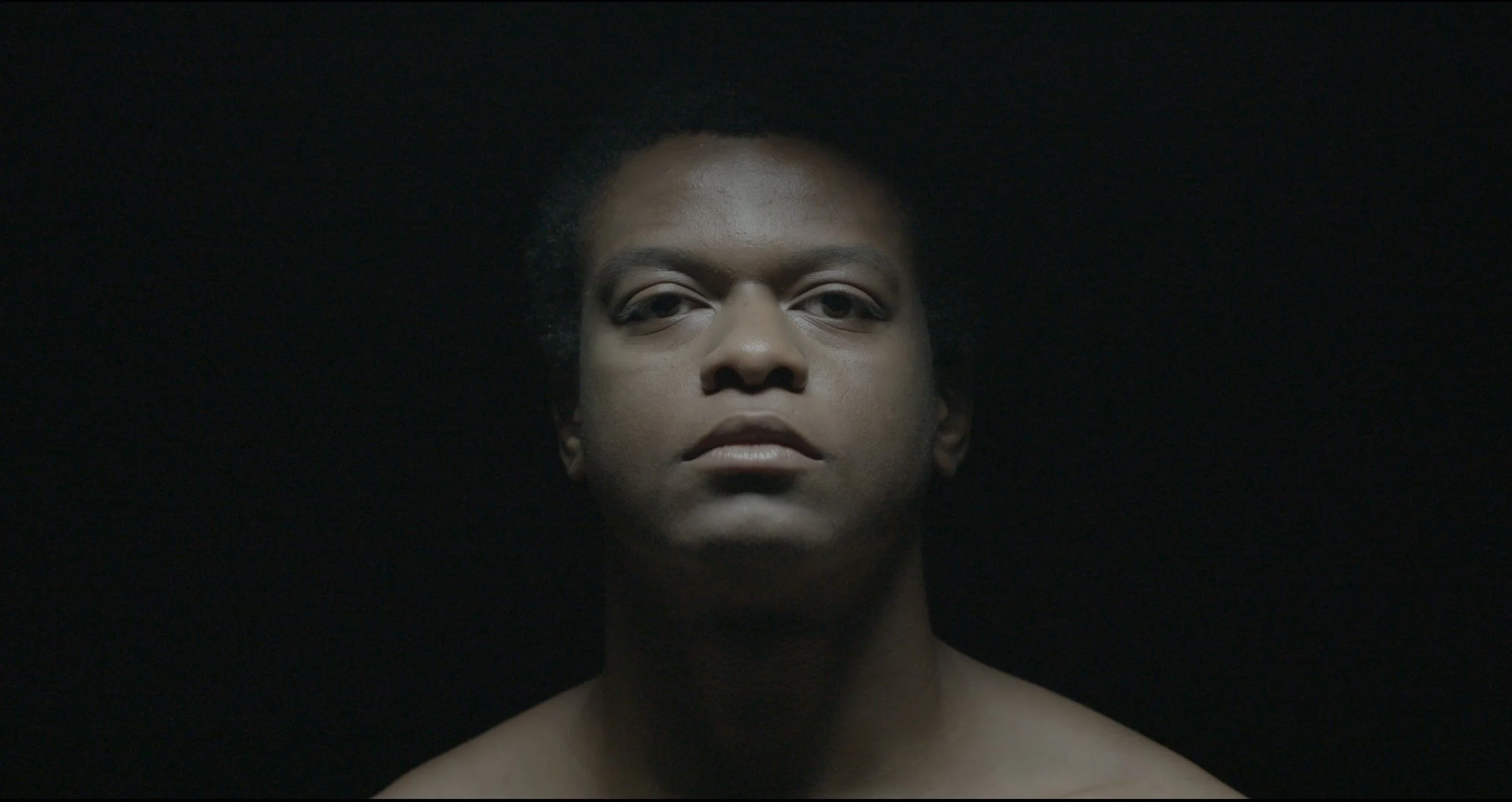
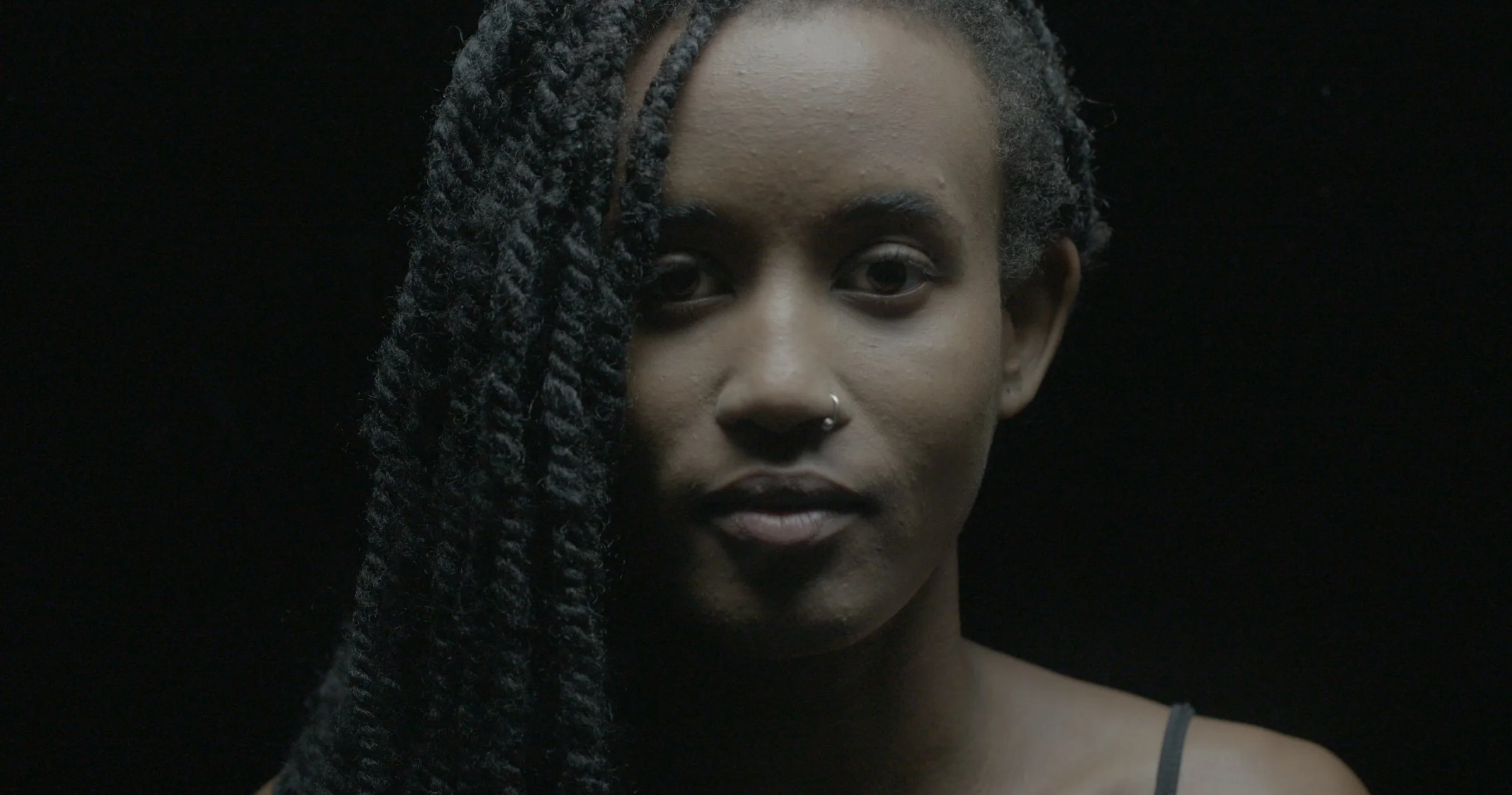
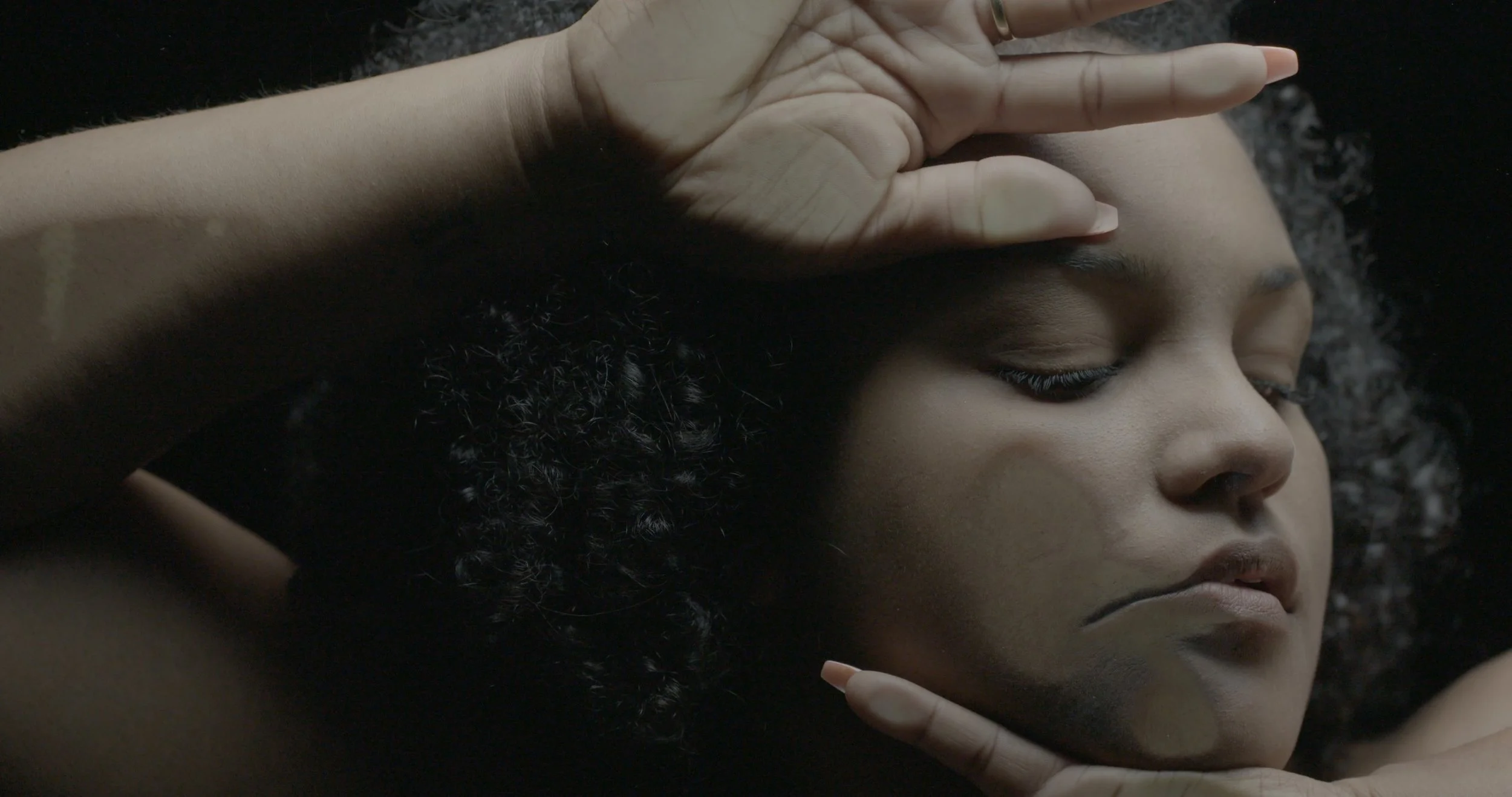
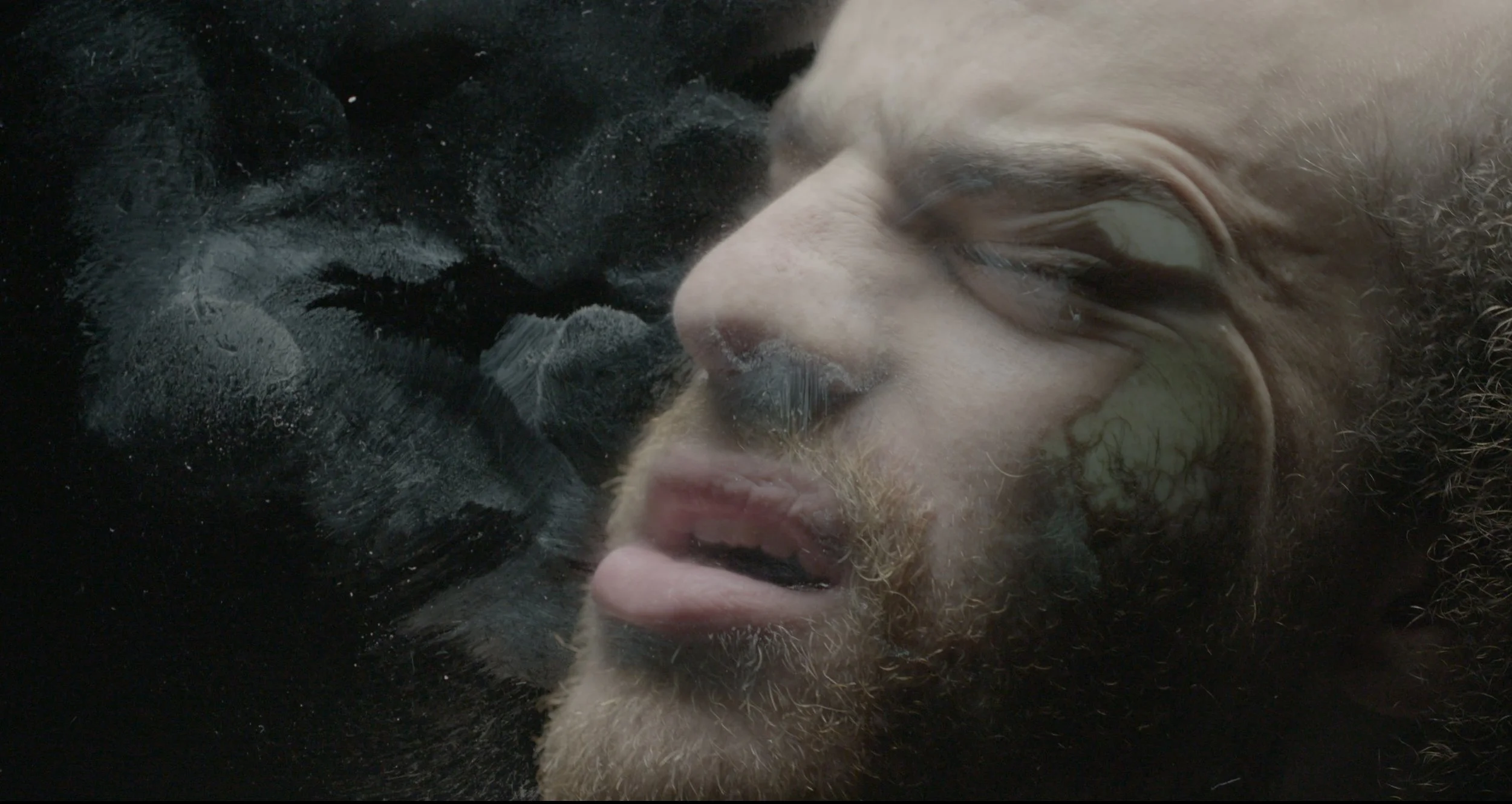
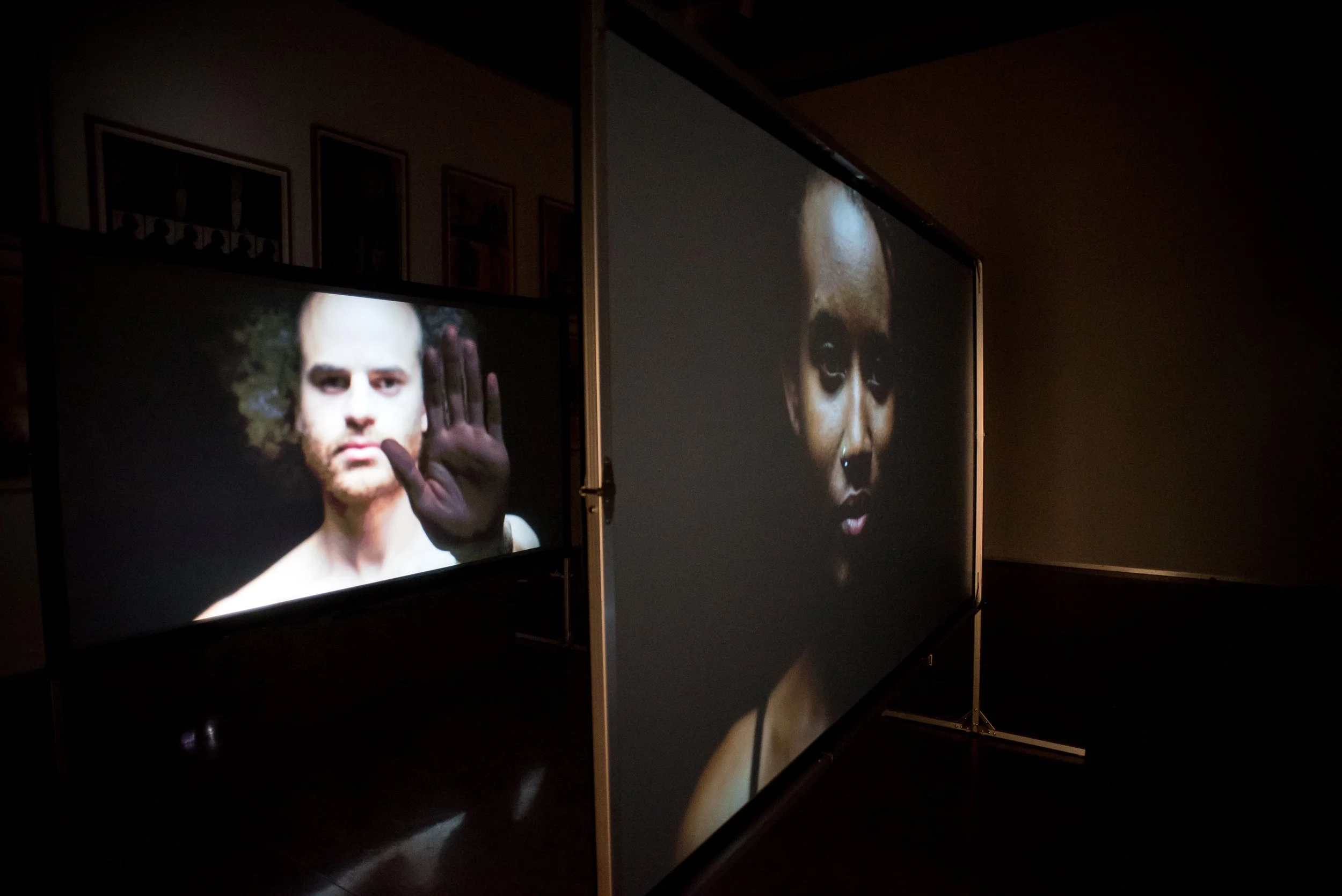
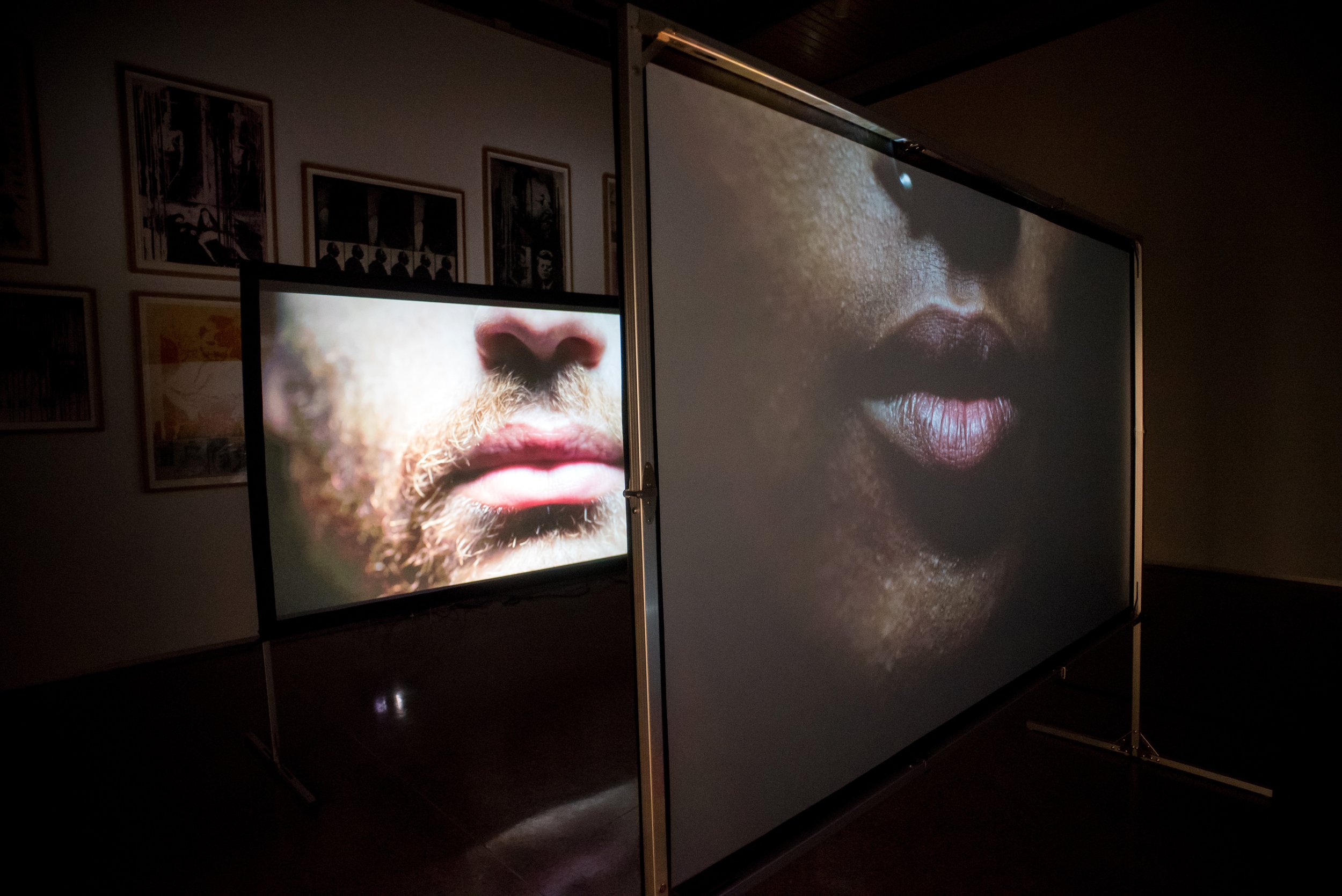
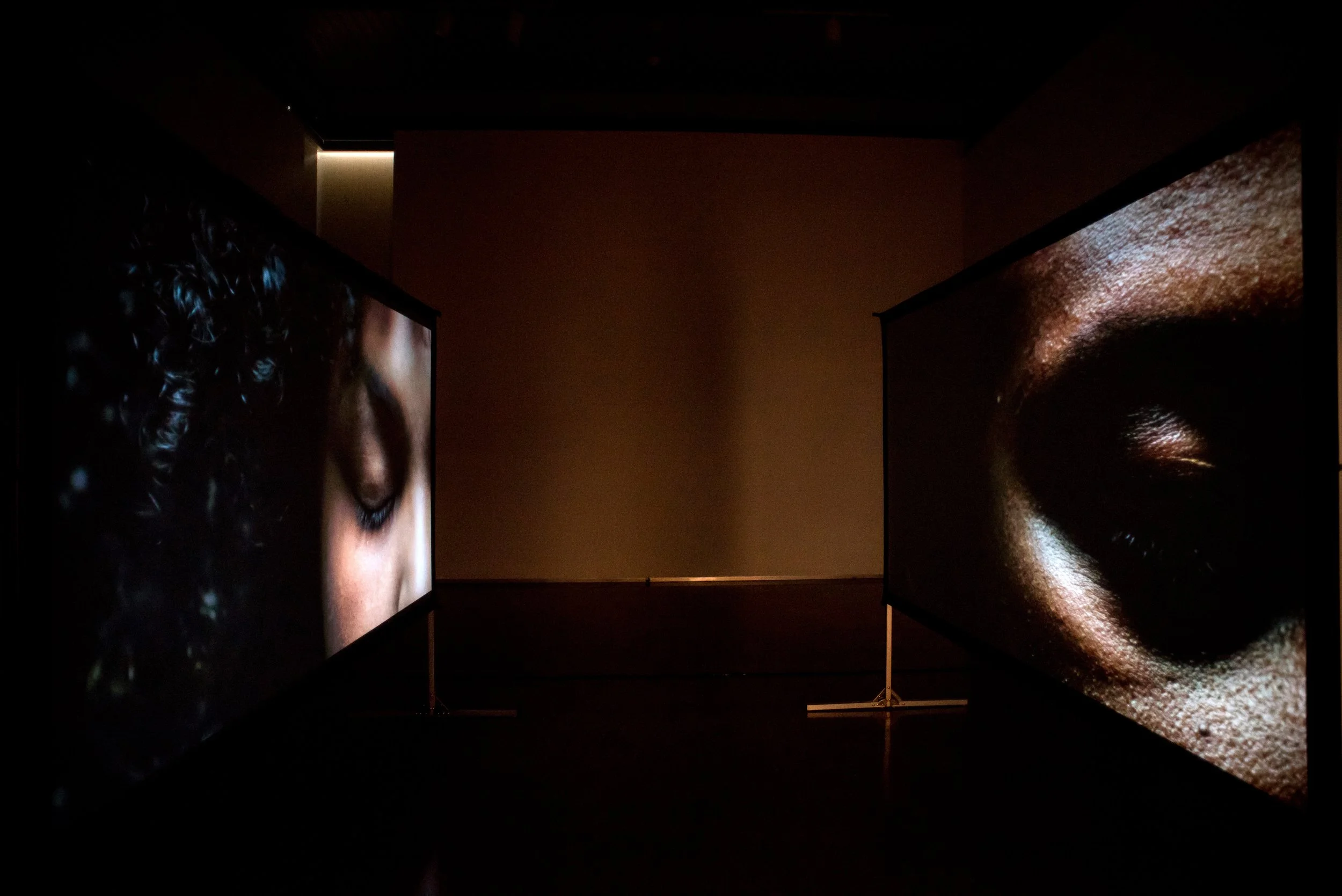
Emergence is a video installation by Nadine Valcin created to counter the violence of blackface in its representation of Blackness. This piece re-asserts the beauty of Blackness and challenges the reductive nature of contemporary Canadian blackface through extreme close-ups of black faces in all their diversity.
Shot in extreme slow motion and projected by two projectors at a large scale on two screens, they appear to be stills at first, but reveal themselves over time to be moving images. These parts of lips, noses, eyes, posit the face as a signifying landscape. Serene images contrast with others that depict faces and arms pressed against glass, at once distorting them and alluding to the constraining conditions that trap black bodies in stereotypes as well as their struggle to break free.
The installation was shot in Toronto at facilities made available by York University in August 2017, with York student support. We would like to acknowledge the studio staff and management at the Department of Cinema & Media Arts, School of AMPD, York University, for making this video installation possible by providing equipment and studio space. We would also like to acknowledge the Research Studio for Narrative, Visual, and Digital Methods at Brock University, directed by Dr. Andrea Doucet, for loaning us the screen and projector equipment which make this video installation possible. We would like thank Le Labo Centre for Francophone Media Arts of Toronto and the Ontario Arts Council for providing exhibition assistance for the project.
Photos by Garrett Elliott
Scream Café //
Artist: Anique Jordan
Scream Café is a performance in which audience members are invited to participate and witness an act of audible or silent screaming. The performance, creates a participatory space that does not remove the body or the action from the environment that incites a response, but instead, as a site dependent work, responds directly to it. It is a simple gesture that is as much revolt as release, rendering the body unpalatable. The guttural voice of the interior body, the presence or absence of sound, and the act of interrupting provide a pointed, embodied intervention into a normalcy that renders the lives of Black people as disposable.
Think Tomorrow Installation Display //
Artist: Quentin VerCetty
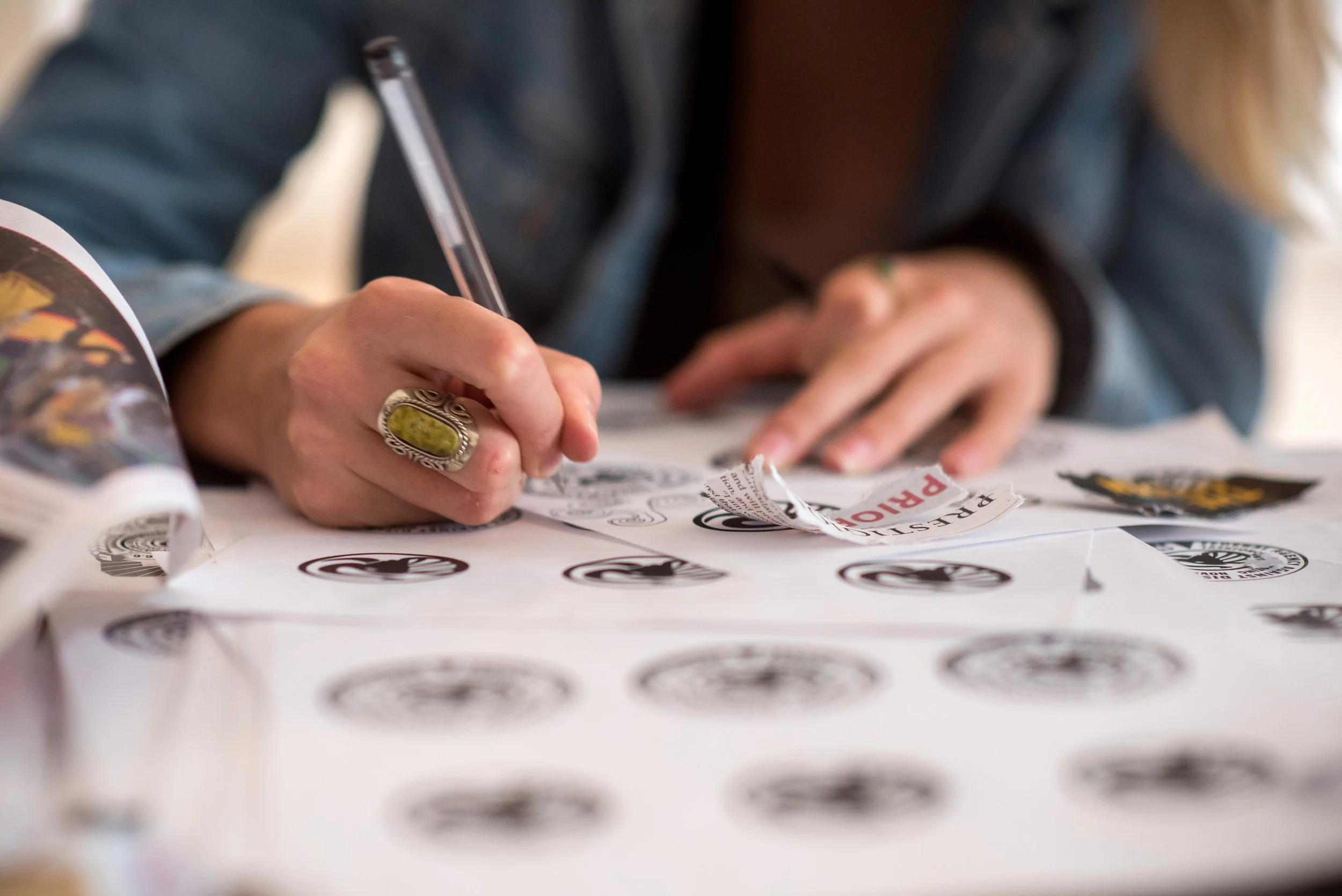
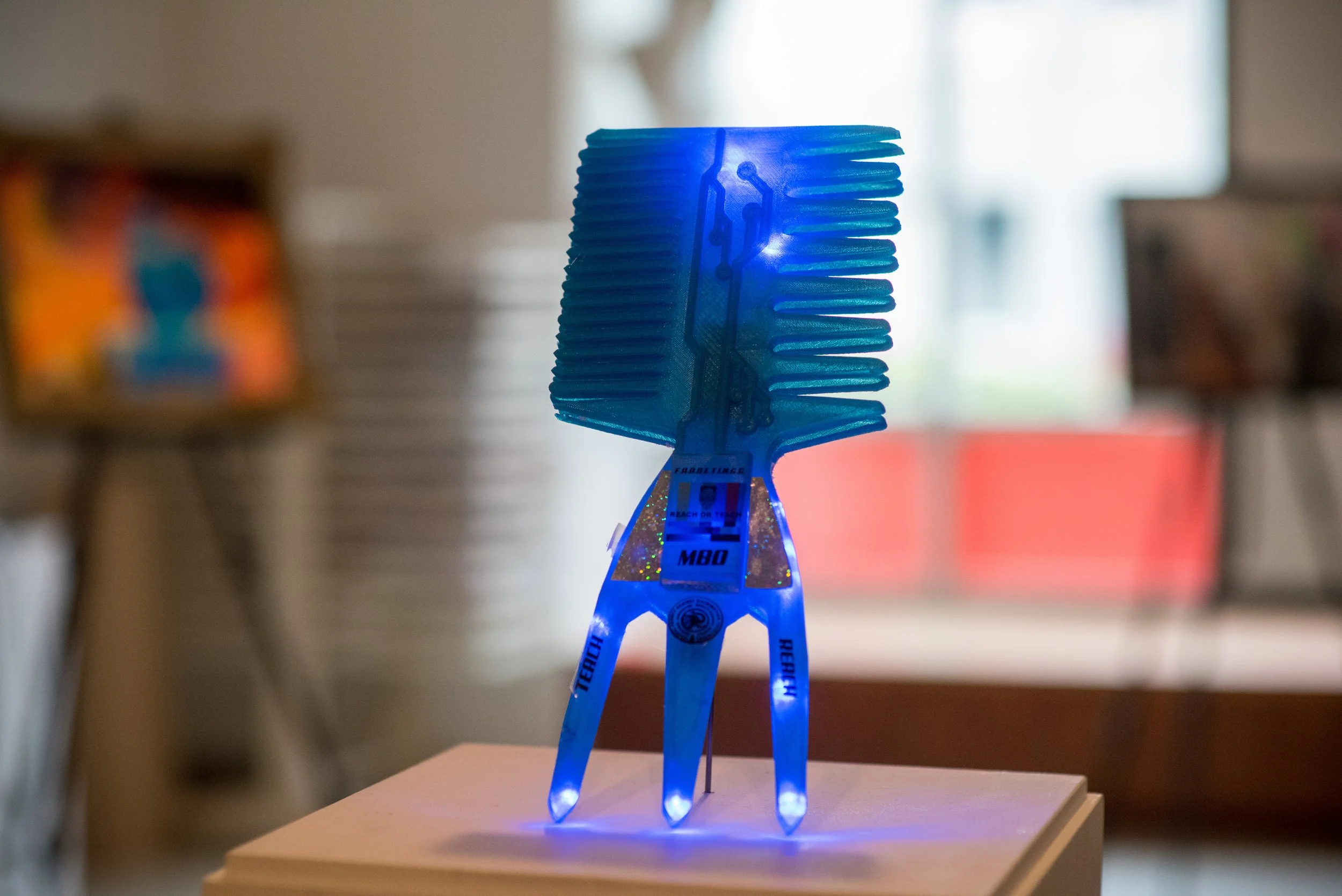
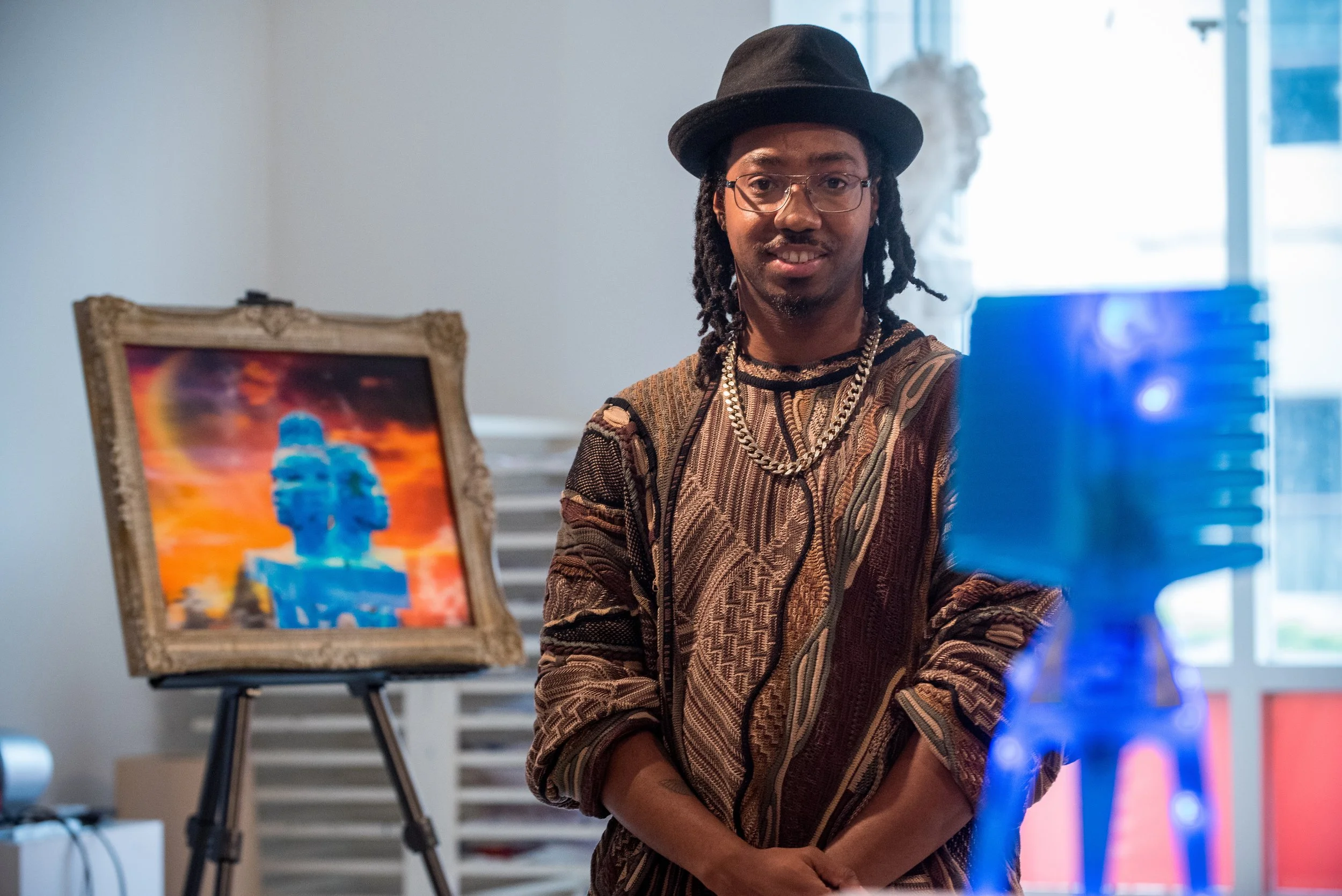
This piece, created by Quentin VerCetty, will engage with Afrofuturism to think about a world in which it is understood that racial appropriation is unacceptable and disapproved of by the society. This piece consists of two interactive digital lenticular print product advertisements from an imaginary government organization called F.A.A.D.E.T.I.N.G.G. (Federal Agency Against Discrimination Everywhere Task-force; Innovating Novelty Gadgets Globally) tasked with educating about, and preventing, blackface, anti-blackness, and racial discrimination. Its slogan would be “Think Tomorrow Today - We Are Just One Swipe Away - From An Anti-Oppressive Sector/ Making Change One Swipe At Time”.
The two products being promoted are imaginary devices for the detection of racial appropriation and anti-blackness which can also be used as a digital encyclopedia to teach and understand the dangers and effects of anti-blackness and racial appropriation and how insensitive acts can cause harm to others and adversely affect future generations. 3D print models of the devices will be on display on plinths along with propaganda poster ads scattered around it.
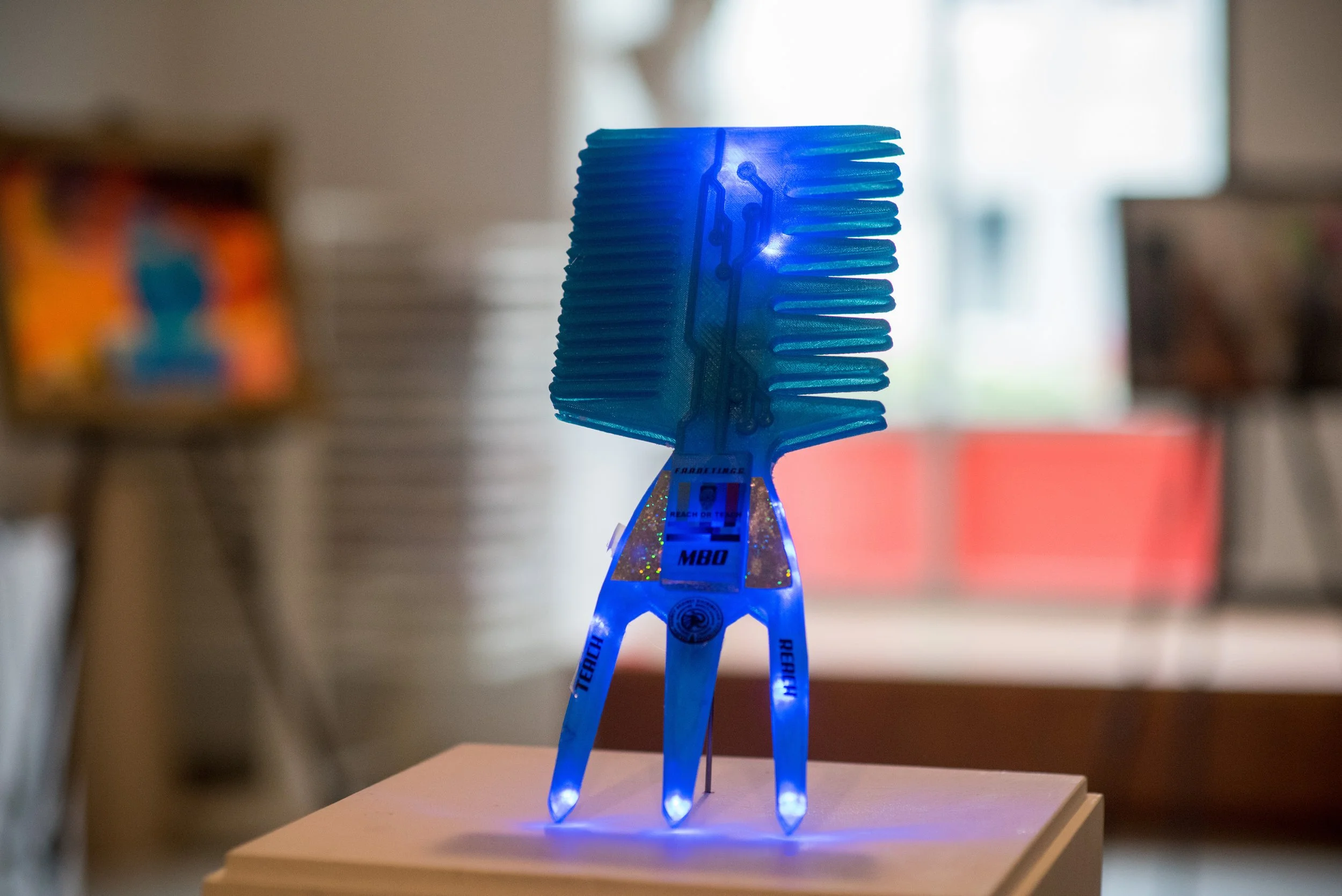
Photo by Garrett Elliott
Unwearable (Defence/Offence) //
Artist: Esmaa Mohamoud
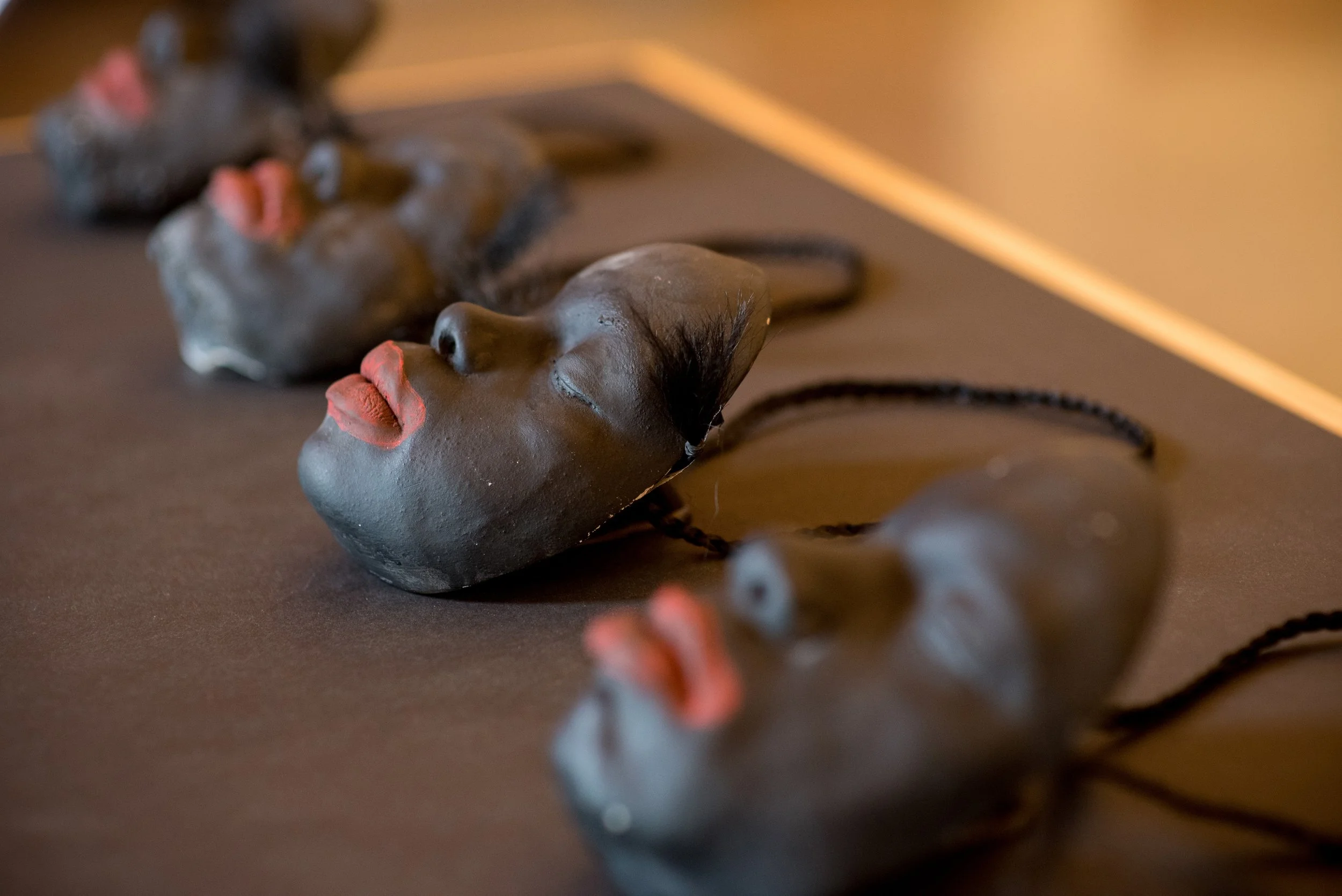
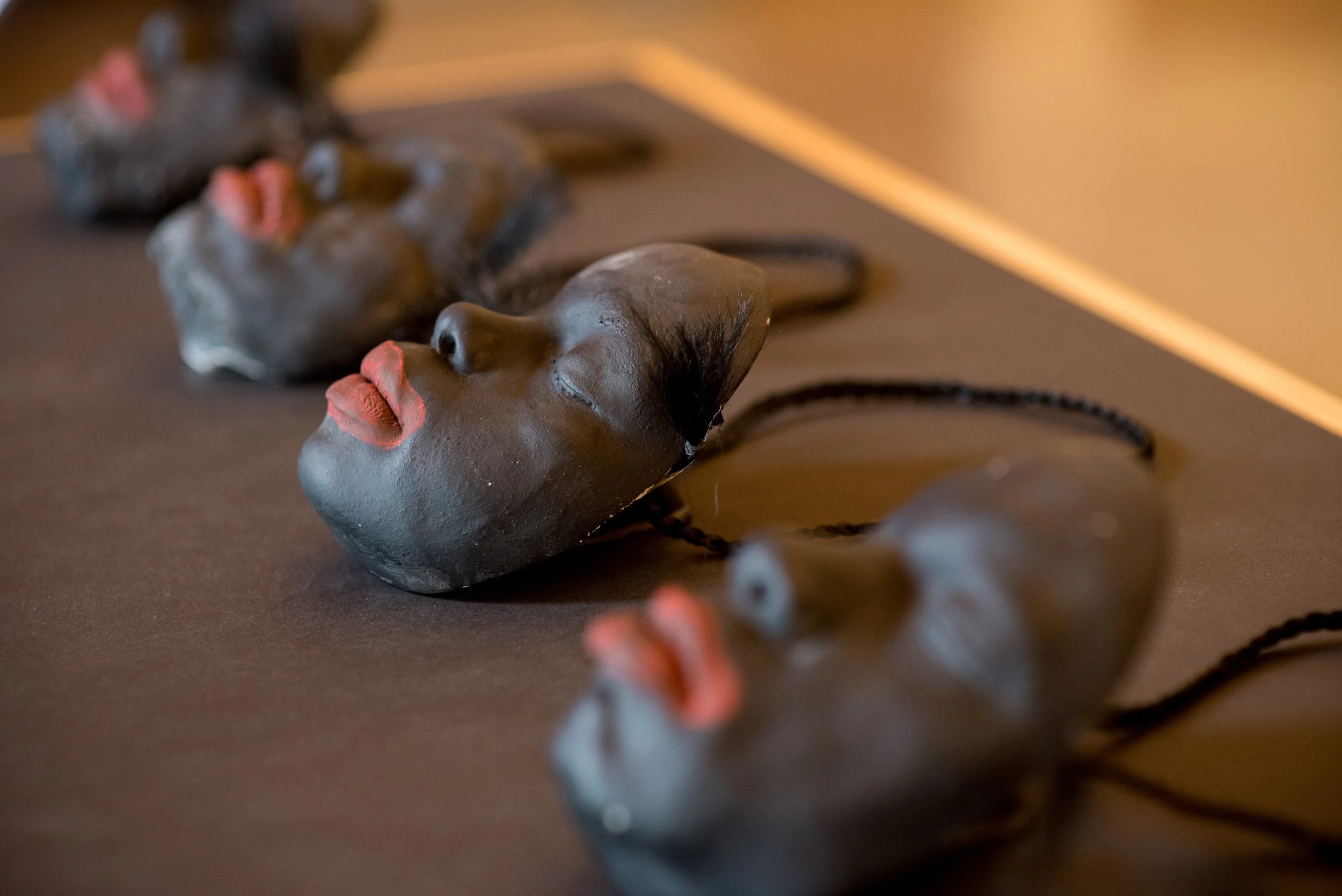
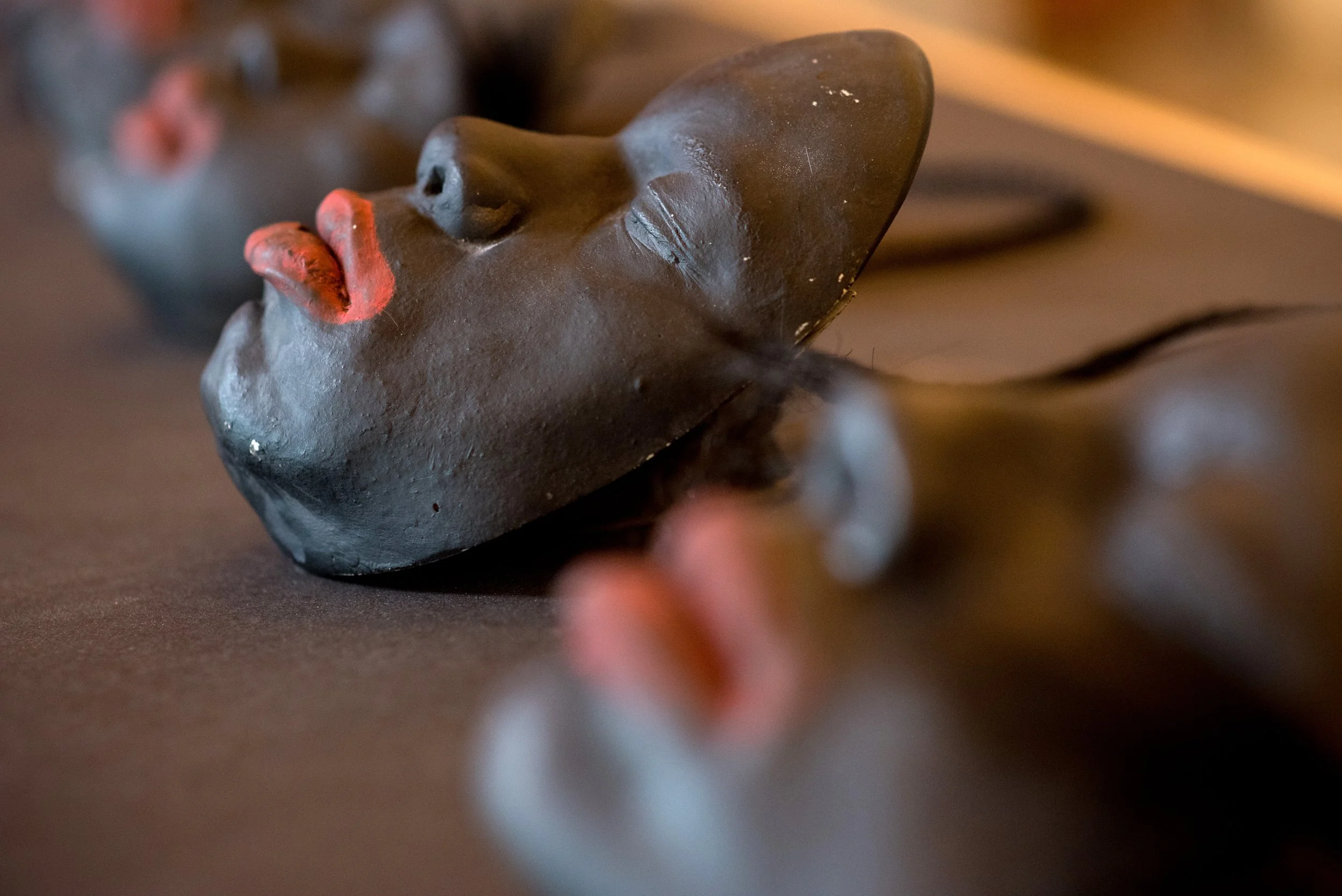
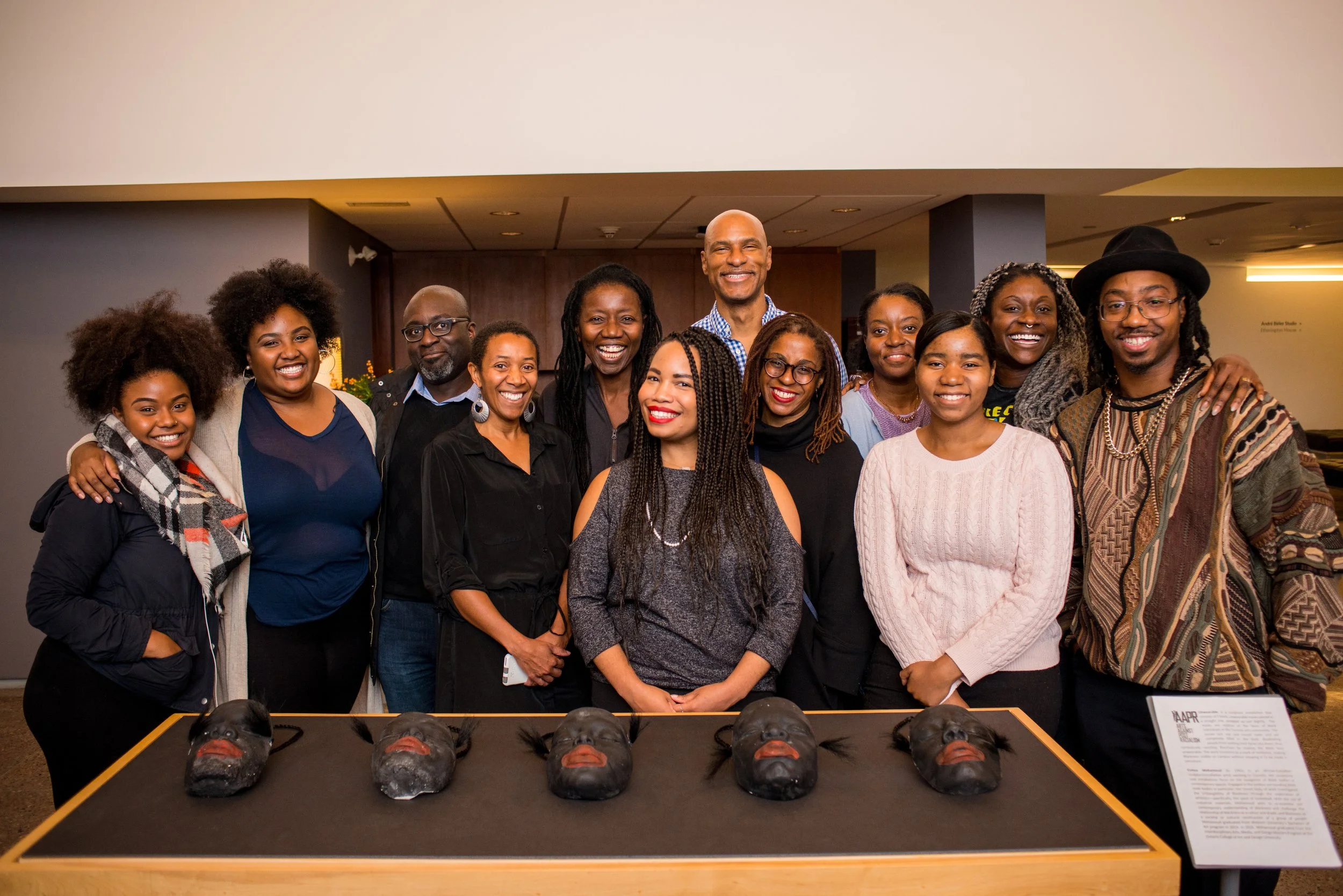
Unwearable (Defence/Offence) is a sculpture installation that consists of 12 black, two-sided masks placed on metal poles arranged in a straight line. The masks will be back-to-back replicas of the faces of volunteers who identify as Black. These two-sided masks disallow people from putting their faces into them, thus symbolically resisting Blackface by making the Black face unwearable. The work functions as a mark of resilience, making Blackness visible on campus without allowing it to be made a caricature.
Photos by Garrett Elliott
Future Memories Workshop //
Artist: Quentin VerCetty
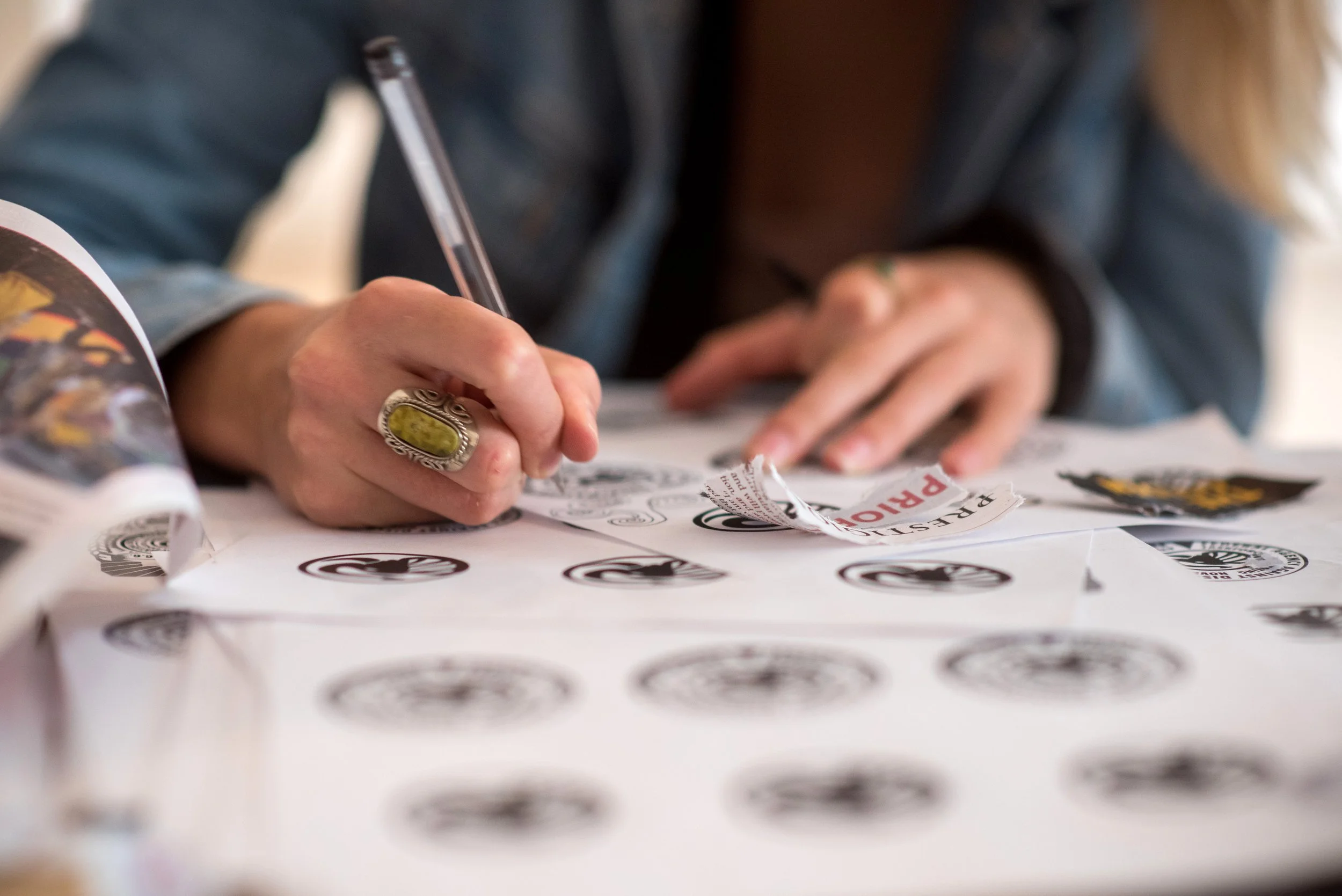
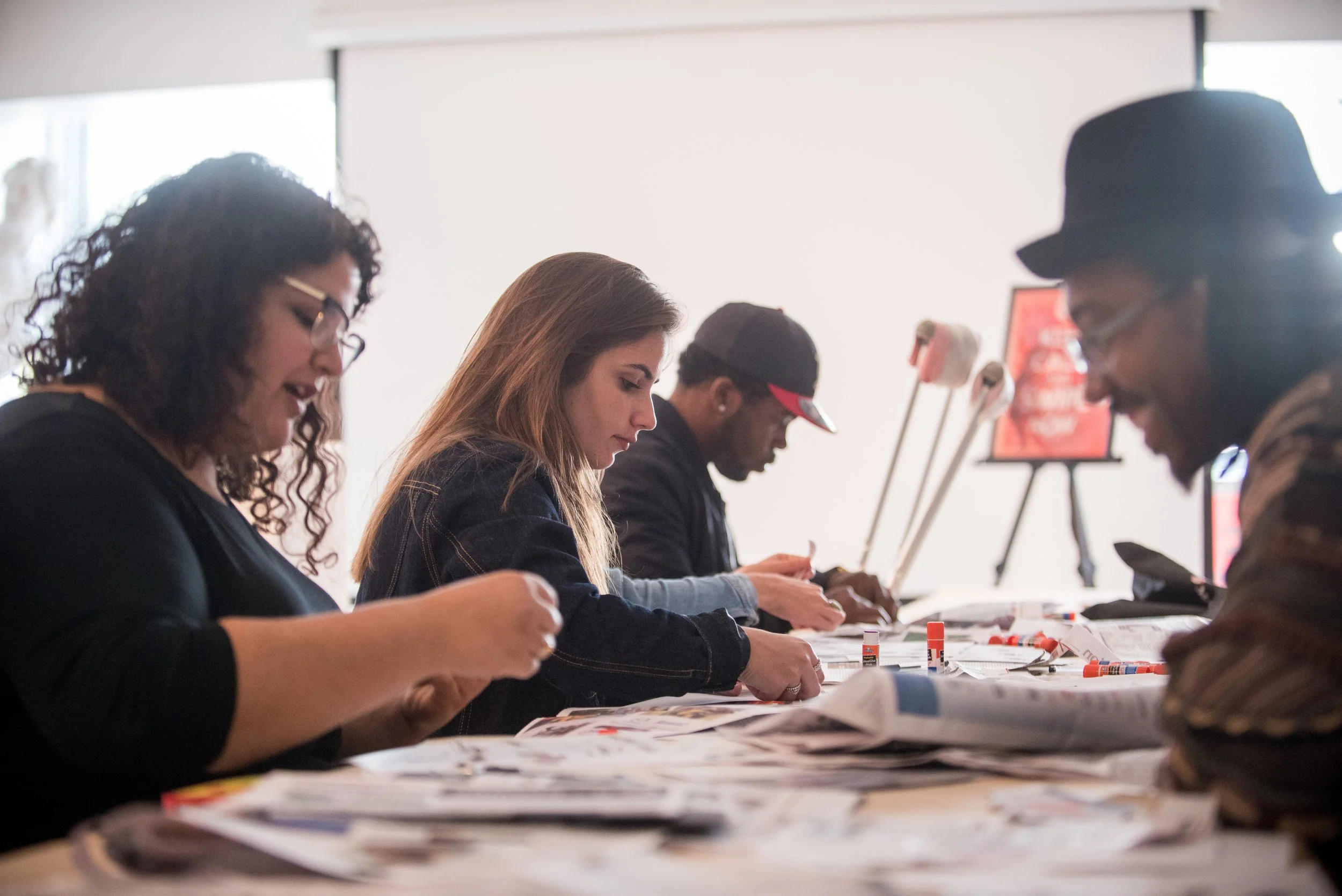
This discussion-based session encouraged participants to use the Afrofuturist imagination—building on VerCetty’s Think Tomorrow installation—to envision blackface as an obsolete manifestation of anti-Black racism from a bygone era.
Participants dialogued about the memory and future of blackface: Should it be remembered and taught in schools or erased from history? Should it be criminalized after eradication? What would the impact be across populations, and what might this mean for social justice? Attendees documented their reflections and turned them into potential propaganda ads or testimonies for the imaginary future government organization, F.A.A.D.E.T.I.N.G.G. The completed works were placed into a time capsule for burial on campus grounds.
AAPR Team Panel and Talkback
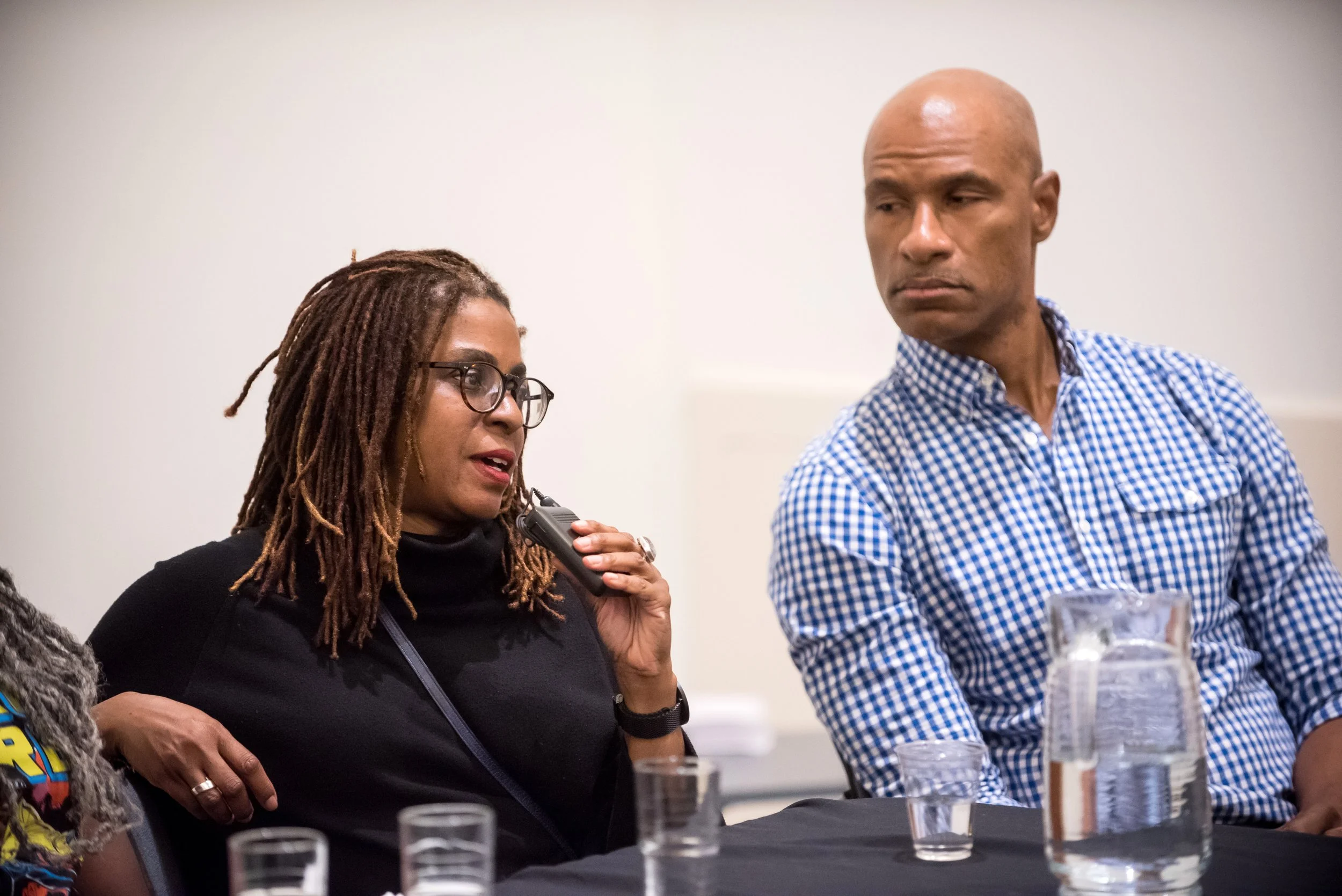
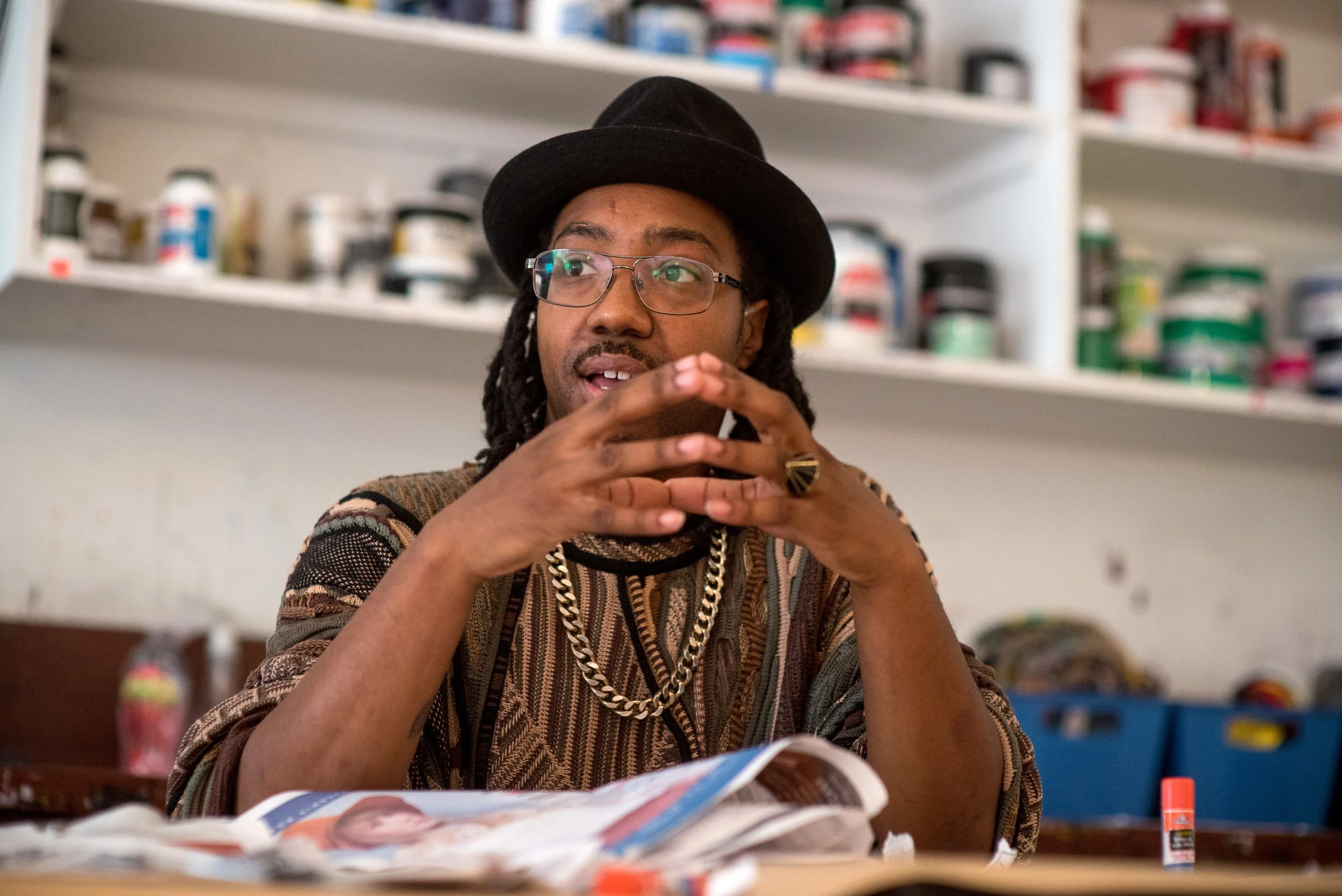
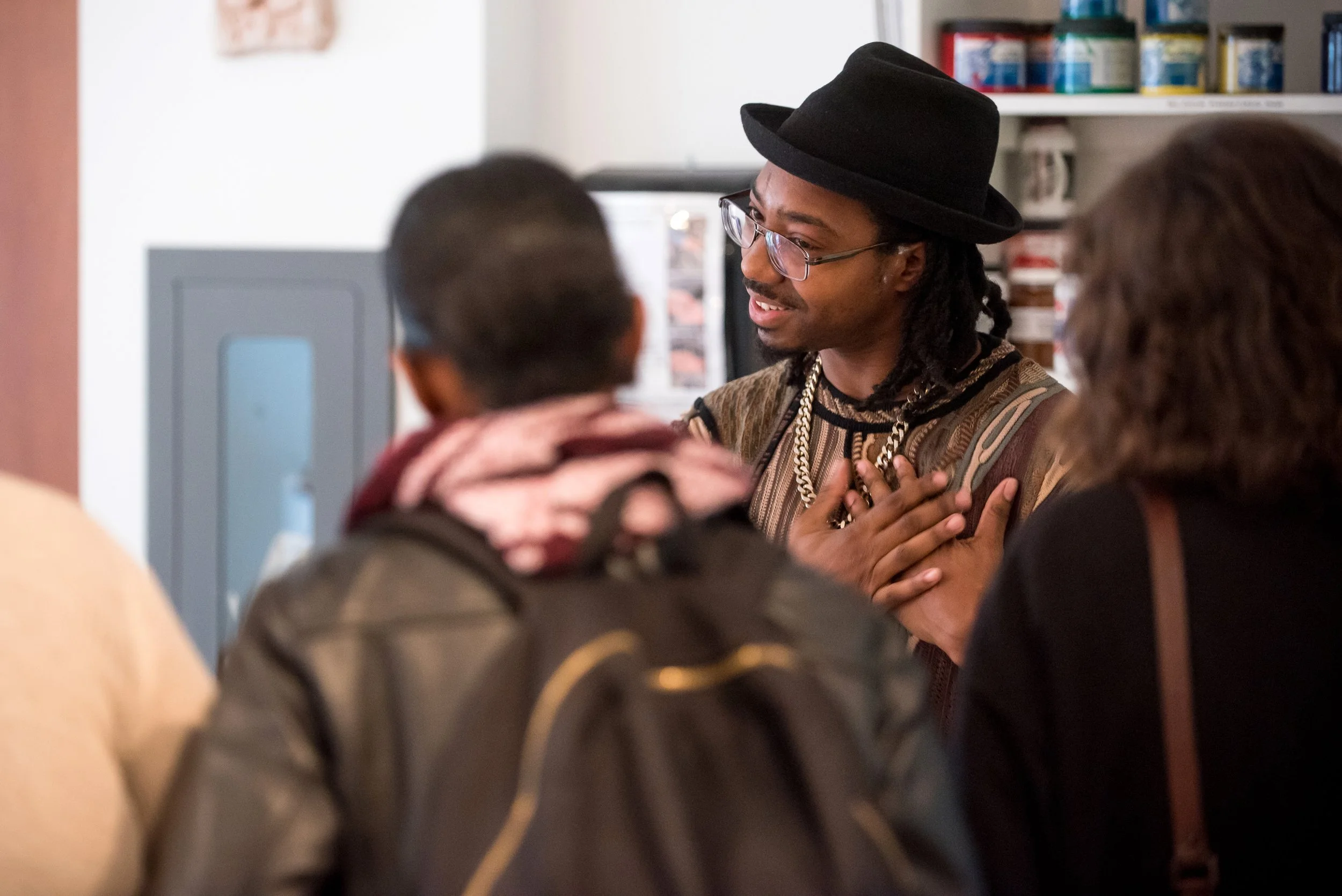
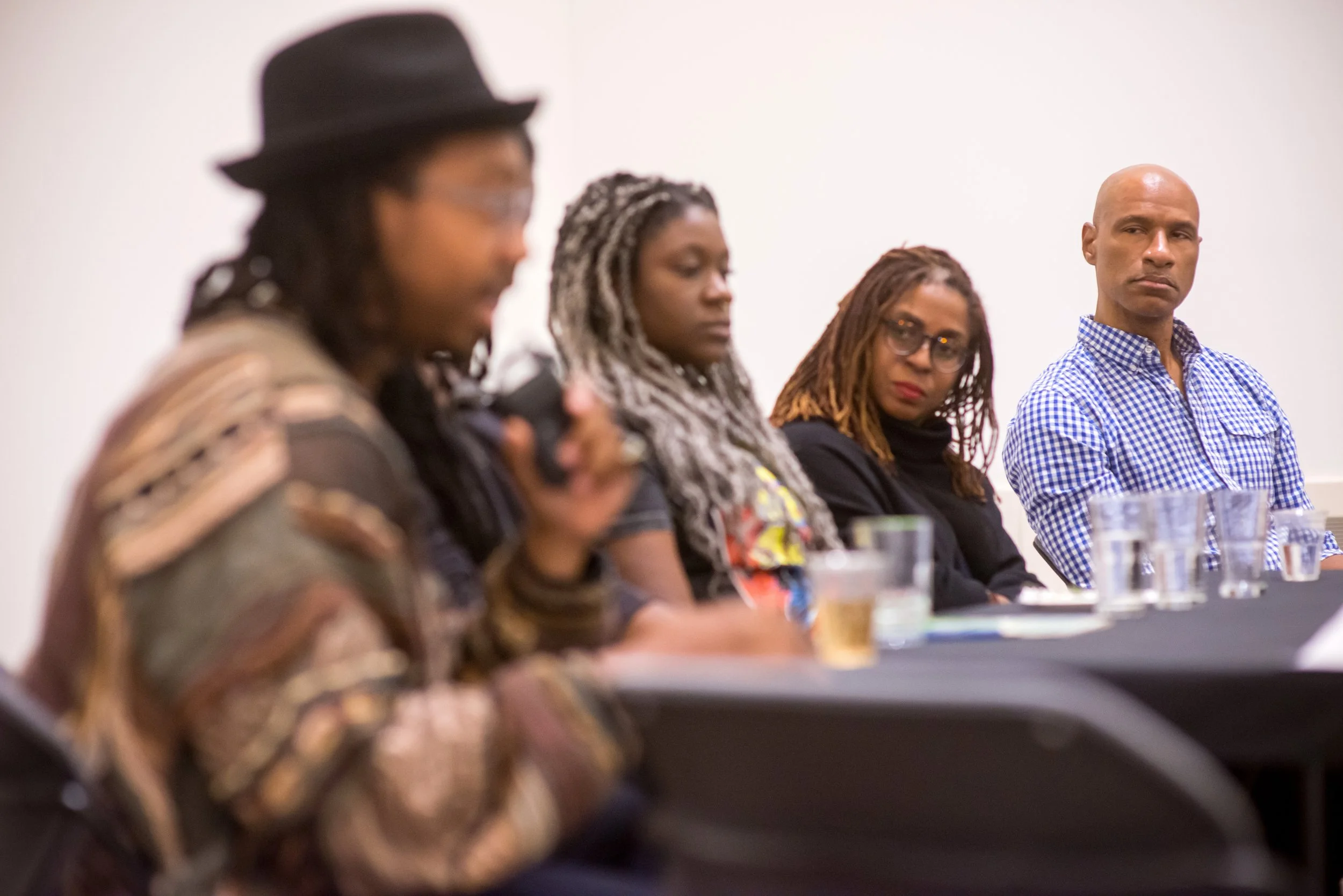
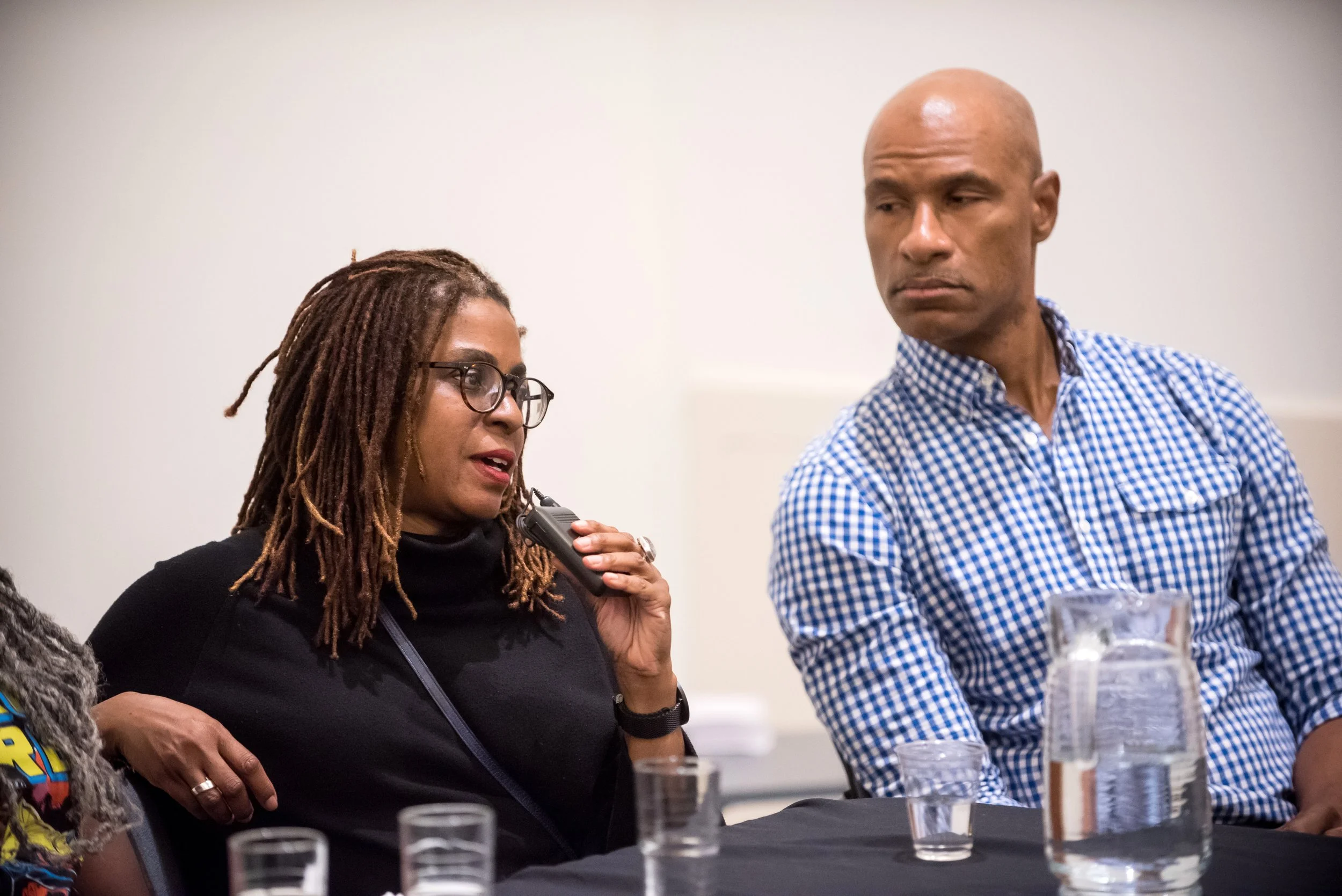
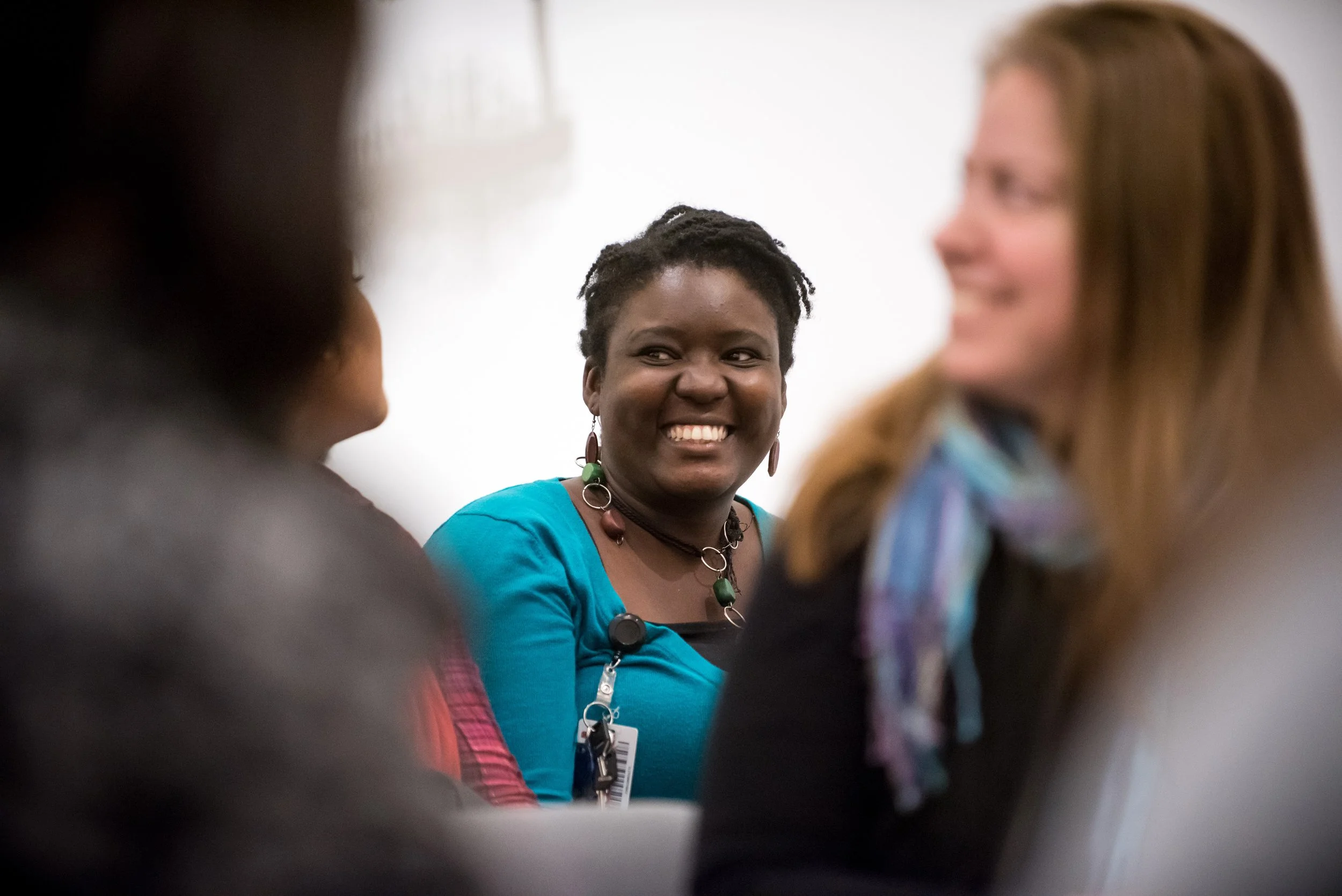
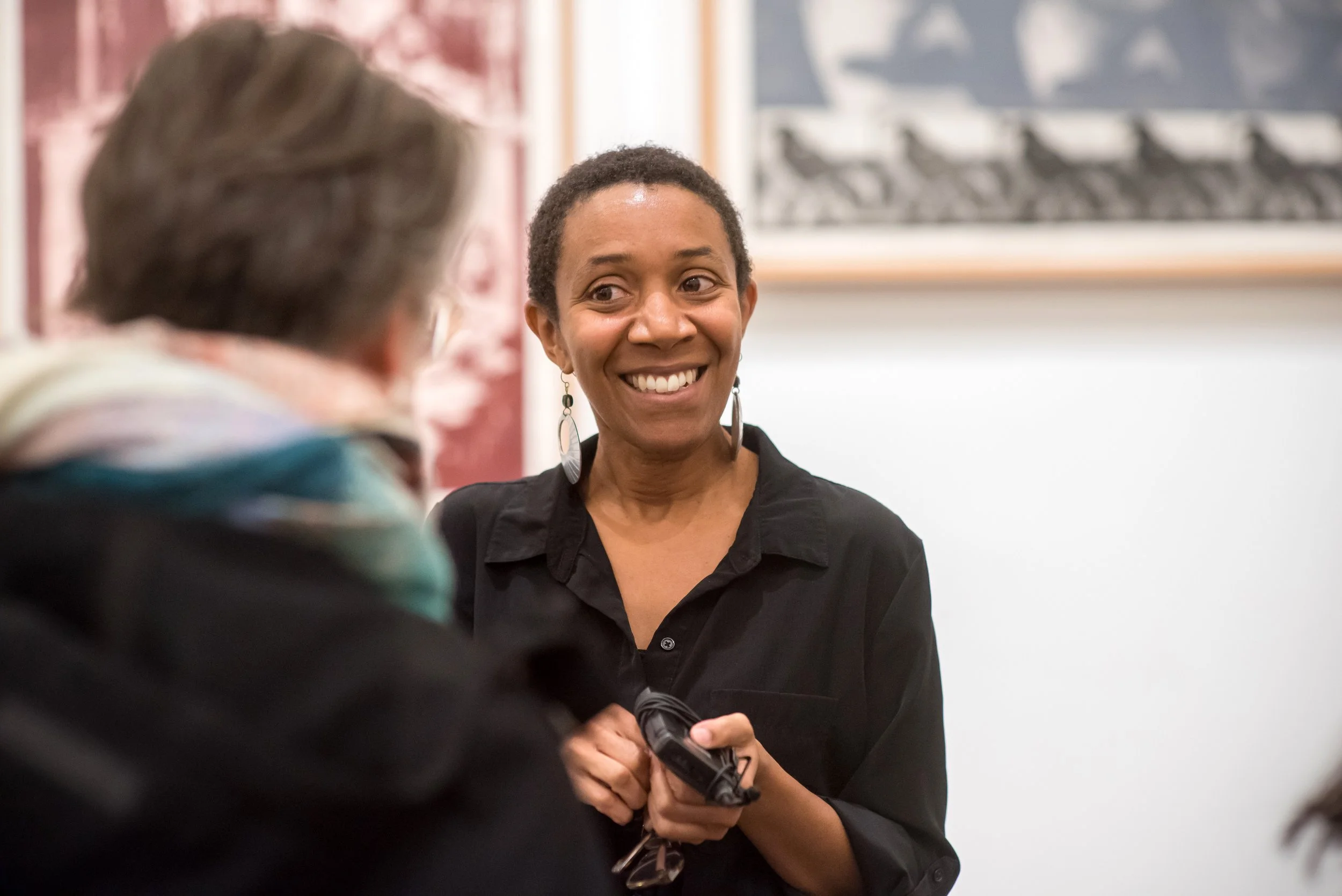
This event offered an opportunity to hear from the Arts Against PostRacialism team. Professor Philip Howard, curator Camille Turner, and artists Anique Jordan, Esmaa Mohamoud, Nadine Valcin, and Quentin VerCetty engaged in a facilitated conversation about their work on the Arts Against PostRacialism project and how they envisioned it contributing to resistance against contemporary Canadian blackface.
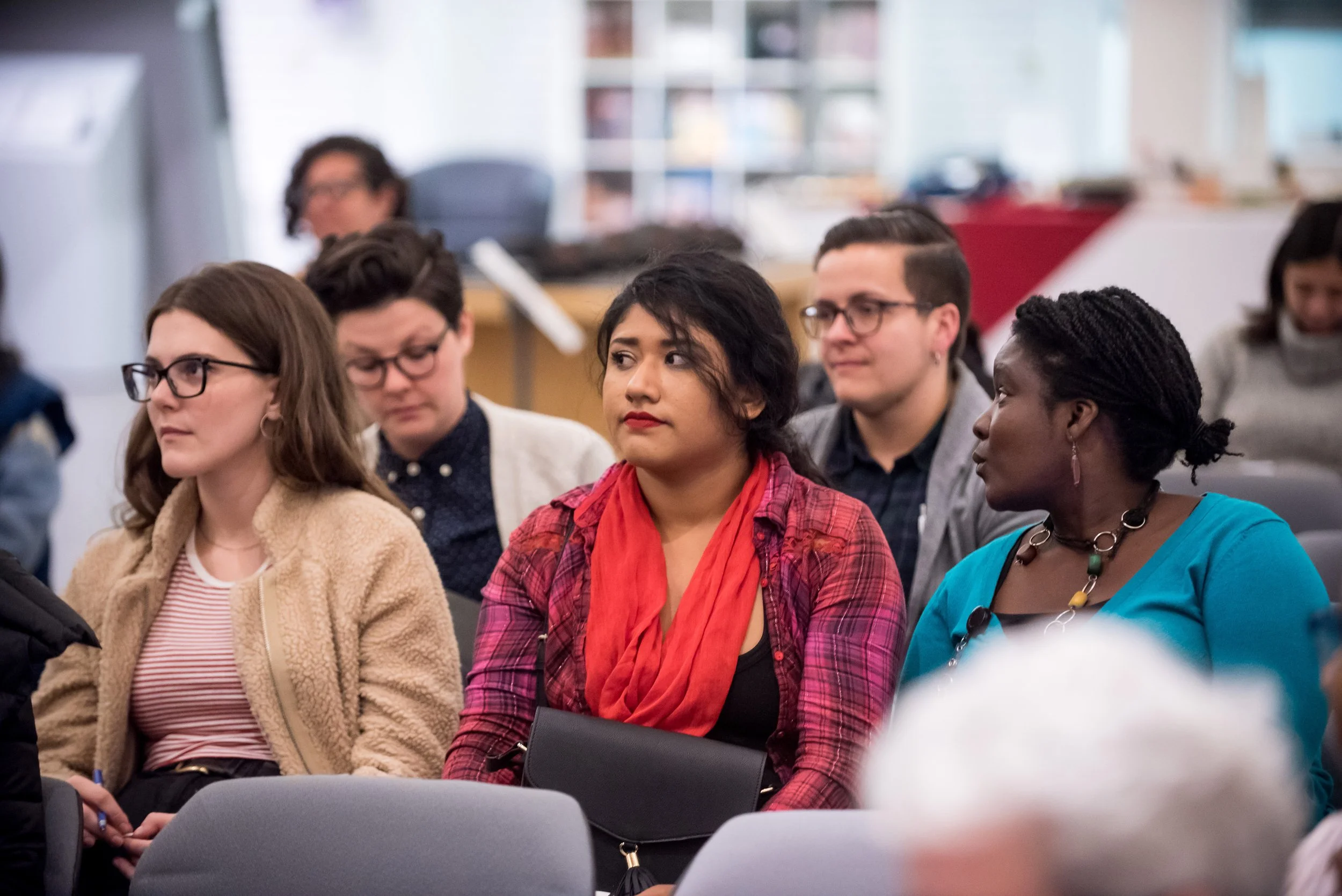
Audience members were invited to ask questions of the team.
Photos by Garrett Elliott
AAPR Artist Bios
Camille Turner [camilleturner.com]
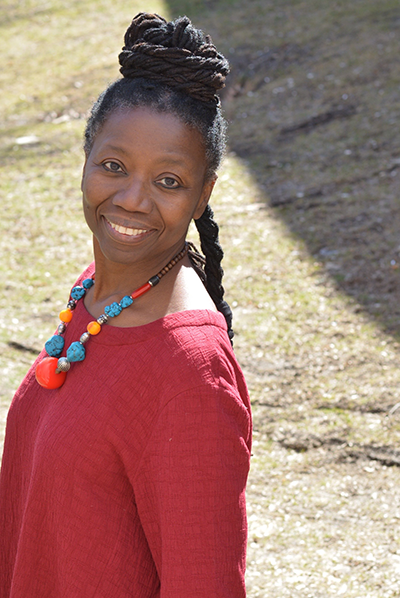
Born in Jamaica and based in Toronto, Camille Turner is an explorer of race, space, home and belonging. She is the founder of Outerregion, an afrofuturist performance company. Her interventions, installations and public engagements combine Afrofuturism and historical research and have been presented throughout Canada and internationally including at Dak’Art African Contemporary Art biennale in Dakar Senegal and Bamako biennale in Mali.
Miss Canadiana, one of her earliest performance works, challenges perceptions of Canadianness and troubles the unspoken binary of “real Canadian” and “diverse other”. The Afronautic Research Lab is a futuristic reading room in which participants encounter erased histories. Sonic walks HUSH HARBOUR and The Resistance of Peggy Pompadour reimagine and evoke digital sites of Black memory. The Landscape of Forgettingis a walk created collaboratively with Alana Bartol to reveal the history of Black and Indigenous people enslaved in the Windsor area. Spare Parts, a collaboration with researcher Monir Moniruzzaman, Jim Ruxton and Heather Dewey Hagborg is a curatorial project that explores ethical issues arising from the growth of technomedicine and the corresponding expansion of the global market in human organs.
Camille’s most recent works include: Wanted, a collaboration with Camal Pirbhai that uses the trope of fashion to transform an archive of newspaper posts by Canadian slave owners into a series of contemporary fashion ads. Her collaboration with Cheryl L’Hirondelle on LandMarks2017 commissioned by Parks Canada and Partners In Art resulted in Freedom Tours, an alternative Thousands Islands boat tour and a procession honouring Mother Earth at Rouge National Park.
Camille has taught at various institutions such as University of Toronto, Algoma University and Toronto School of Art. She is a graduate of Ontario College of Art and Design and York University’s Masters in Environmental Studies program where she is currently a PhD candidate. Her work has recently been included in More Caught in the Act edited by Johanna Householder and Tanya Mars, Looking Beyond Borderlines: North America’s Frontier Imagination by Lee Rodney and Border Cultures by Srimoyee Mitra and Bonnie Devine.
Nadine Valacin [rebelsandmisfitsmedia.com]
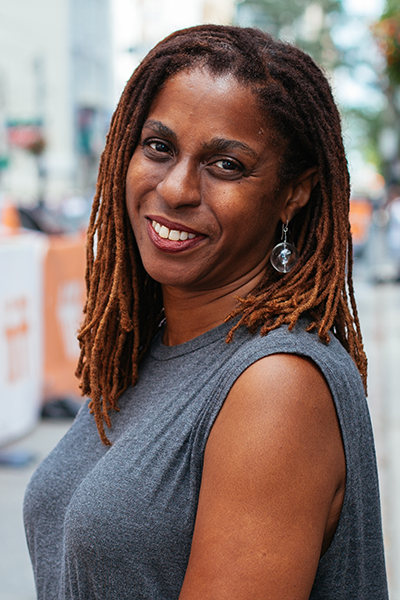
Nadine Valcin is a bilingual Canadian filmmaker of Haitian descent whose documentary and dramatic work deals with questions of race, language and identity. Her film Whitewash (2016), produced as part of an artist’s residency at Osgoode Hall Law School, examines slavery in Canada and its omission from the national narrative through the history of prominent families on Prince-Edward-Island. Her short film Heartbreak (2016), one of thirty finalists among 1700 submissions in the Toronto International Film Festival Instagram Shorts competition, is a tribute to Black mothers raising children in a society structured by anti-black racism.
Anique Jordan [aniquejordan.com]
Anique Jordan is an award-winning artist, writer, curator and entrepreneur. Her recent work thinks about working class aesthetics, time travel, invisibility, Caribbean carnival, and Black Canadian futurities. She is part of the curatorial team at the Art Gallery of Ontario, and is the Executive Director of Whippersnapper Gallery.
Anique Jordan was named the Toronto Arts Foundation 2017 Emerging Artist of the Year.
Quentin VerCetty [vercetty.com]
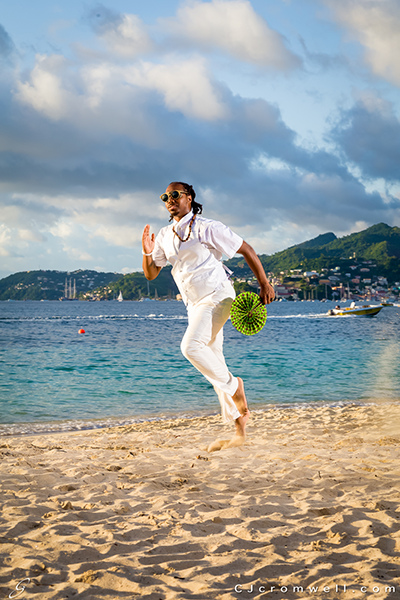
Quentin VerCetty is a graduate of OCAD University (formally known as Ontario College of Art and Design University). His work speaks to the current state of Blackness and imagines ways to advance towards an anti-oppressive, anti-racist future. Working within the realms of Afrofuturism motif, he has co-organized and co-curated the programming for Black Future Month events and art exhibits in the Greater Toronto Area from 2015-2017, expanding to reach an international audience and roster of presenters as founder of the Canadian chapter for the Black Speculative Arts Movement.
As an educator VerCetty works closely with youth promoting the use of art as technologies to create social change. He uses cutting-edge media such as holographic projection and digital printed sculpture to create works that challenge ideas of who is made visible or invisible while addressing issues of representation, youth inclusion, (im)migration, mobility, and alienation.
Site credits: Quentin Vercetty created the AAPR homepage image and the AAPR stencil images. Homepage image: Water No Get Enemy 3017, June 2017, Digital Print or CGI (computer-generated image).
Esmaa Mohamoud [esmaamohamoud.com]
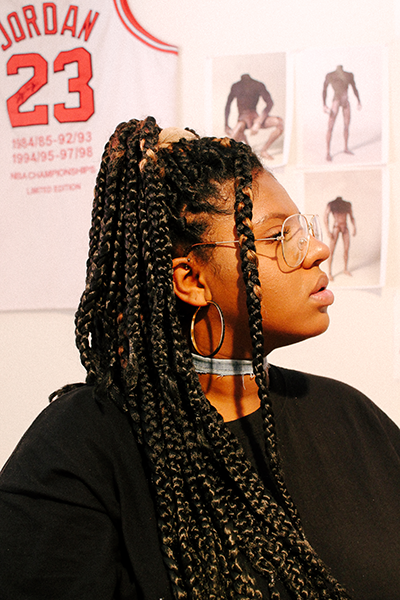
Esmaa Mohamoud (b. 1992) is an African-Canadian sculptor/installation artist working in Toronto. Her sculptures and installations focus on the navigation of Black bodies in contemporary spaces. Engaged in the politics surrounding Black male bodies in particular, her recent body of work investigated the (in)tangibility of Blackness through the exploration of athletics—specifically, the sport of basketball. With the use of industrial materials, Mohamoud aims to re-examine our contemporary understanding of Blackness and challenge the relationship of blackness as a colour and shade, and Blackness as a societal or cultural construction of a group of people.
Mohamoud graduated from Western University’s Bachelors of Art program in 2014. In 2016, Mohamoud graduated from the Interdisciplinary Arts, Media, and Design Masters Program at the Ontario College of Art and Design University. [esmaamohamoud.com]Anique Jordan was named the Toronto Arts Foundation 2017 Emerging Artist of the Year.
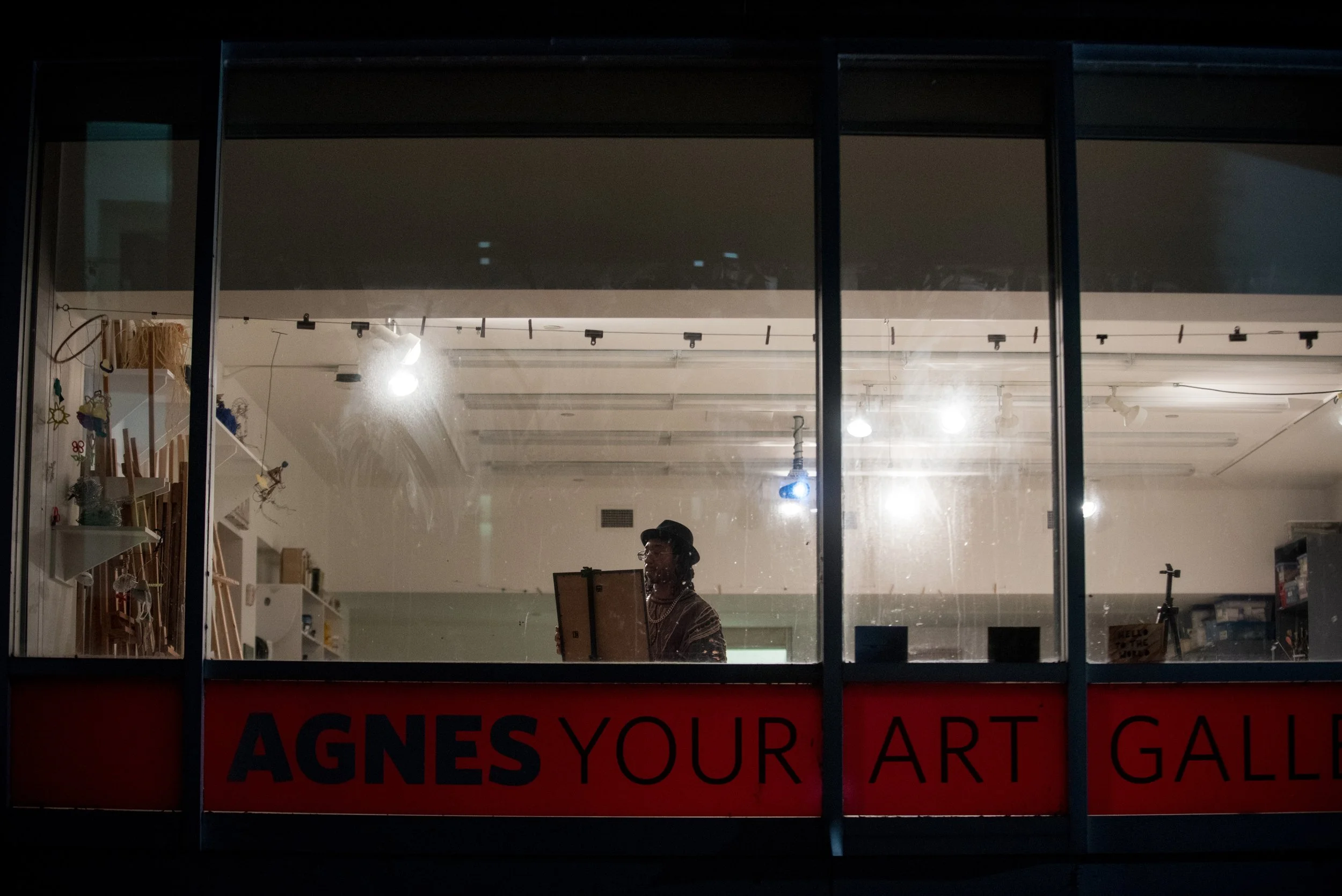
Photo by Garrett Elliott